March 2026's Viral Secret: Your Cat's Mysterious Dance with Water! 7 Surprising Ways Your Feline Friend Interacts with Water!
Cats and water... This duo is often perceived as a paradox. Most people believe cats hate water, and viral videos of bath time nightmares reinforce this belief. However, as we arrive in March 2026, advances in pet behavior science and observations from thousands of cat owners show that this relationship is far more complex, nuanced, and even fascinating. Your cat's connection with water goes far beyond just lapping a drop; it encompasses exploration, play, sometimes fear, but always a deep interaction. At YuDo Pet, we present 7 surprising secrets to help you unravel your furry friend's "mysterious dance" with water and deeply understand their relationship with water sources at home.
Your Cat's Mysterious Dance with Water: Why Such a Complicated Relationship?
To understand cats' relationship with water, we must first delve into their origins. Domestic cats' ancestors were typically desert animals living in arid climates, fulfilling their water needs from the prey they hunted. This is one of the primary reasons for their natural aversion to water. However, this doesn't mean all cats hate water.
Evolutionary Legacy: Hunters of Arid Lands
Cats' ancestors adapted to use water efficiently to survive in the desert. Deep waters could restrict their hunting abilities and weigh down their fur, leaving them vulnerable. This evolutionary legacy forms the basis of why modern cats approach water cautiously. Yet, this instinct leads to some interesting behaviors in a contemporary home environment.
Touch Sensitivity: The Role of Whiskers and Paws
Cats' whiskers (vibrissae) and paws are incredibly sensitive sensors used to explore their surroundings. Their perception of water is closely linked to these sensors. Sudden contact with water, especially unexpected wetting, can be extremely uncomfortable for cats because it disrupts their natural sensory systems.
7 Surprising Interactions and Smart Observation Methods
Now, let's explore seven different aspects of your cat's complex yet fascinating relationship with water, and discover how you can understand and leverage each one.
1. Curiosity About Water: Drop Hunters and Faucet Maestros
Many cats love to watch running water or try to catch drops from a faucet. This is part of their predatory instinct. Running water is perceived as more attractive and safer than still water because, in nature, stagnant water sources can harbor germs.
Smart Observation Method: Observe how much time your cat spends by the faucet. If they love running water, providing them with a cat water fountain will both increase their hydration and provide mental stimulation. YuDo Pet's advanced filtered water fountains ensure your cat always has access to fresh, flowing water.
2. Debunking the Bath Trauma Myth: What's Really Happening?
While cats avoiding baths is common, it doesn't mean every cat hates water. It often stems from a traumatic experience, forced baths, or not being accustomed to water at an early age. Some cat breeds (e.g., Maine Coon, Turkish Van) naturally enjoy water and are inclined to swim.
Smart Observation Method: Gently and gradually accustom your cat to water. Provide small water experiences with play and positive reinforcement. Never force them. You can encourage a positive association with water using water toys or food rewards.
3. The Art of Paw Dipping: Is It Measuring Water Quality?
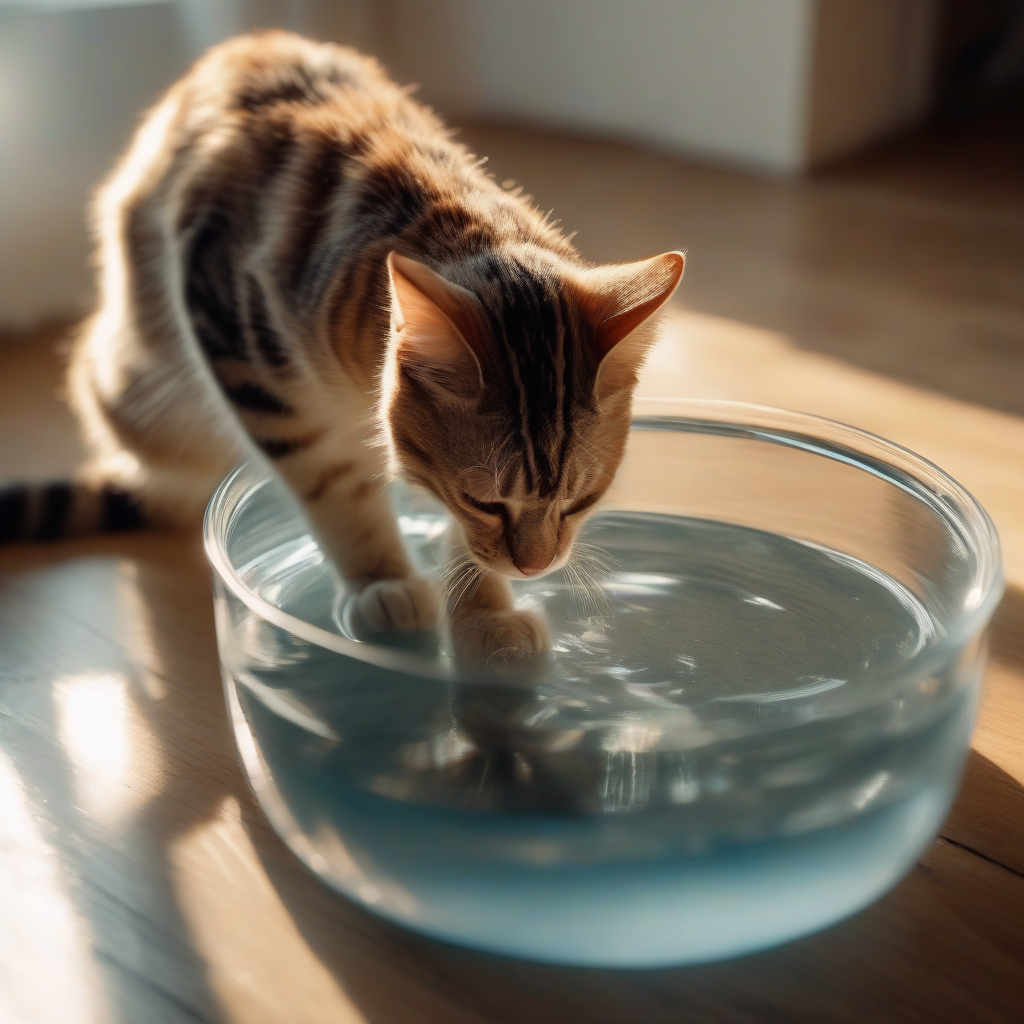
Your cat dipping its paw into the water bowl and then licking it is a very common behavior. This could be related to an instinct to test the water's depth, temperature, or quality. Also, due to whisker sensitivity, they might prefer to drink water with their paws if their whiskers touch the bowl's edges, causing discomfort.
Smart Observation Method: Use wide, shallow, stainless steel or ceramic water bowls. This prevents your cat's whiskers from touching the edges and won't affect the water's taste. YuDo Pet's whisker-friendly water bowls are an excellent solution for this.
4. Water as a Playmate: A New Dimension of Mental Stimulation
Water can be a fantastic tool for play and mental stimulation for cats. Light balls floating in a bowl of water or ice cubes can activate your cat's predatory instincts and provide hours of fun. This is especially important for indoor cats.
Smart Observation Method: Observe your cat's desire to play with water. If they are curious, create a safe play area for them with a small bowl of water and a few floating toys. Experiment and discover what kind of water games your cat enjoys.
5. The Waterproof Secret of Fur and Grooming Routine
Cats' fur has a natural barrier against water thanks to an oily layer, which prevents their fur from getting wet quickly. Cats are meticulously clean when it comes to self-grooming, and this is a vital part of their natural care routine.
Smart Observation Method: Support your cat's grooming routine. Regular brushing, especially during increased shedding in spring, reduces the amount of ingested hair and prevents matting. This can make your cat feel more comfortable and potentially drink less water if hairballs are a concern.
6. Hidden Water Sources: Natural Instincts
In the wild, cats often prefer to hide food and water sources to prevent potential predators from finding them. Even in a home environment, placing multiple water bowls in different, quiet, and safe spots can encourage your cat to drink more water.
Smart Observation Method: Place multiple water bowls in different areas of your home (a quiet corner, a sunny windowsill, near their bed). Observe which bowl your cat visits most frequently. Be careful not to place water bowls too close to food bowls; the instinct that prey might contaminate water is still present in cats.
7. Water as Sensory Enrichment: Stress-Reducing Potential
Don't forget that water can be used not only for drinking or bathing but also as a tool for sensory enrichment. A pet humidifier or an aquarium can maintain the home's humidity balance while offering visual and auditory stimulation to your cat. The sound of running water can be calming for some cats.
Smart Observation Method: Note your cat's reactions to water. If they enjoy calming sounds or light reflections, a small desktop waterfall or a fish aquarium (safely positioned) can offer them a new area for discovery.
Your cat's relationship with water is an important part of its personality and instincts. Understanding this "mysterious dance" is key to strengthening your bond with your furry friend and improving their quality of life. Make this viral discovery of March 2026 with YuDo Pet and enrich your perspective on your cat's world of water!