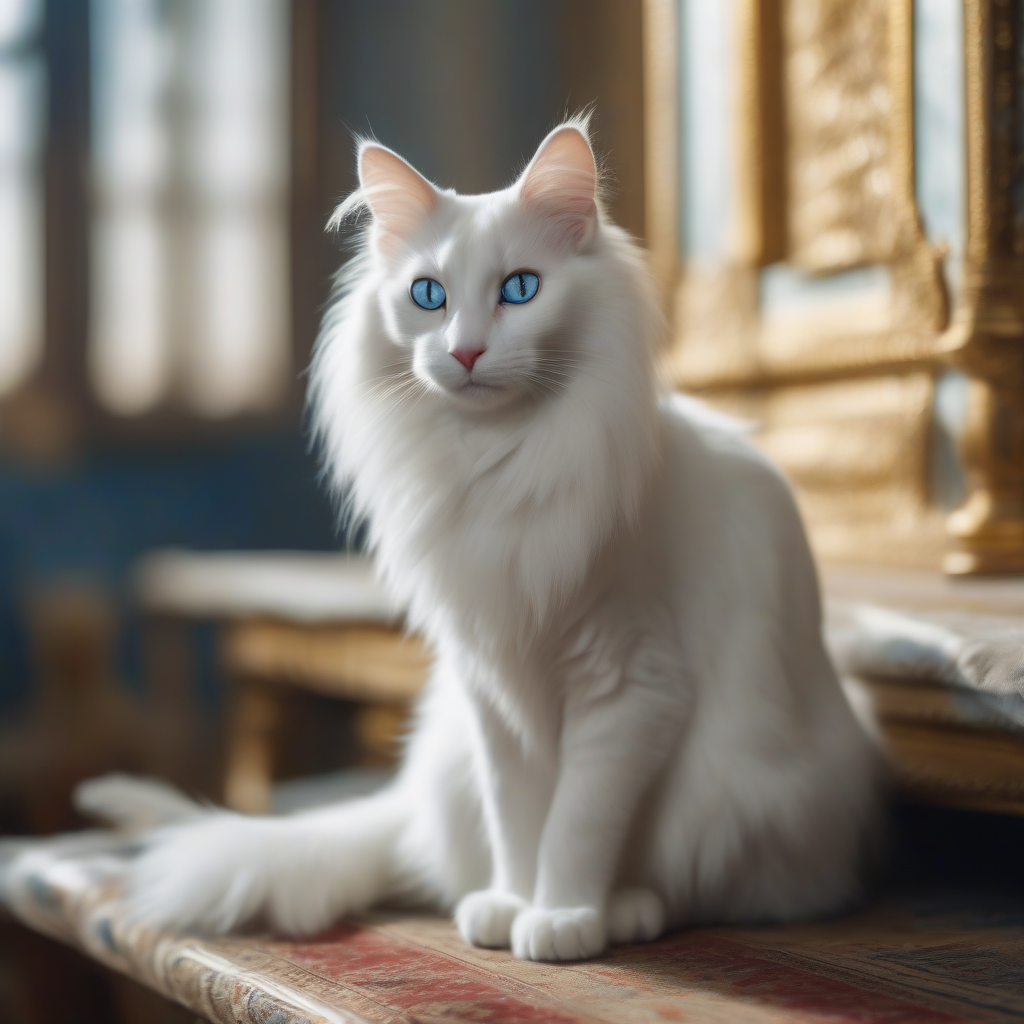
A to Z Cats: Turkish Angora Character, Care, and History
The Turkish Angora, one of Turkey's national treasures, is a special breed that has captivated cat lovers worldwide with its elegance, noble demeanor, and enchanting personality. Evolved over centuries in the snow-capped mountains of Ankara, this breed is known for its long, silky fur and striking eyes. In this installment of our "A to Z Cats" series, we will delve into the unique characteristics, care, and rich history of the Turkish Angora cat.
Origins and History of the Turkish Angora
The history of the Turkish Angora dates back at least to the 15th century, believed to originate from the Middle East, specifically the region of Ankara, today's capital of Turkey. They were first brought to Europe in the 16th century by traders and explorers and quickly became a popular pet among noble families. Considered the ancestor of long-haired cats in the West, the Turkish Angora gained fame, particularly in the 17th century, when it was owned by King Louis XIII of France and Cardinal Richelieu.
In the early 20th century, the existence of the Turkish Angora was threatened by the rising popularity of other long-haired breeds, especially the Persian cat. However, the Ankara Zoo in Turkey initiated a crucial breeding program to preserve the purity and continuation of the breed. Thanks to these efforts, the breed was saved from extinction and began to regain international recognition from the 1970s onwards.
Physical Characteristics
The Turkish Angora possesses an elegant and athletic body structure. They are medium-sized, muscular yet delicate in appearance. Their most prominent features include:
- Coat: They have semi-long to long, silky, single-layered coats. This fur changes seasonally, being shorter and lighter in summer, and fuller and denser in winter. Traditionally known for their white coats, Turkish Angoras also come in many different colors and patterns, such as black, blue, red, cream, smoke, tabby, and calico.
- Head and Ears: They have a medium-sized, wedge-shaped head and large ears that are wide at the base, slightly pointed at the tips. The inside of their ears is adorned with tufts of fur.
- Eyes: They have large, almond-shaped eyes that can be various colors, including blue, green, amber, or gold. "Heterochromic" or "odd-eyed" Turkish Angoras, with one blue eye and one green eye, are particularly famous and may carry a genetic risk of deafness (especially on the blue-eyed side).
- Tail: Long, bushy, and feathered, resembling a fox's tail. It is usually carried in proportion to the body.
- Legs and Paws: They have long, slender legs and small, round, tufted paws.
Character and Temperament
The Turkish Angora is known not only for its beauty but also for its vibrant, intelligent, and highly affectionate character. They don't just want to be pets; they want to be an active and interactive member of the family.
- Intelligence and Playfulness: They are extremely intelligent and curious. They love puzzle toys and enjoy interacting and playing games with their humans. Their hunting instincts are strong, and they love watching their surroundings from high places.
- Affectionate and Social: They form strong bonds with their humans and often show special affection to one person. While they can be hospitable, they are generally most devoted to their immediate family. They enjoy being cuddled and petted.
- Active and Energetic: They have high energy levels. They love to climb, run, and explore. Providing them with sufficient play and mental stimulation prevents boredom and the development of undesirable behaviors.
- Vocal: They are vocal cats and try to communicate with their owners through meows, purrs, and trills in different tones.
Care Requirements
Caring for a Turkish Angora is relatively easier compared to some other long-haired breeds, but it still requires regular attention:
- Grooming: Their single-layered, silky coats are less prone to matting than those of other long-haired cats. Brushing 2-3 times a week helps remove dead hairs, control shedding, and prevent hairball formation. Brushing frequency can be increased, especially during winter months or shedding seasons.
- Nutrition: They should be fed a high-quality, balanced cat food. Due to their high energy levels, protein-rich foods that support their active lifestyle can be preferred. Portion control is important to avoid obesity.
- Exercise and Mental Stimulation: Providing adequate physical and mental stimulation is essential. Climbing trees, interactive toys, laser pointers, and regular play sessions help them stay happy and healthy.
- Health: They are generally robust cats. However, white cats with blue eyes have a higher genetic risk of deafness. Additionally, some lines may exhibit hereditary ataxia (a disorder affecting balance and coordination). Regular veterinary check-ups, vaccinations, and parasite prevention are vital for their overall health. Dental and ear cleaning should also not be neglected.
Living with a Turkish Angora
The Turkish Angora is an excellent choice for active and interactive families. They can get along well with children and cat-friendly dogs, but they should be provided with an environment that can keep up with their high energy and playfulness. They can adapt to apartment living, but sufficient play areas and vertical climbing spaces must be provided. They do not enjoy being left alone, so they may not be ideal for people who are away from home for long periods.
Conclusion
The Turkish Angora is a breed that stands out not only for its striking beauty but also for its vibrant intelligence, playful spirit, and deep affection. This elegant cat, a source of pride for Turkey, will bring joy and liveliness to your home as a unique companion with proper care and attention.