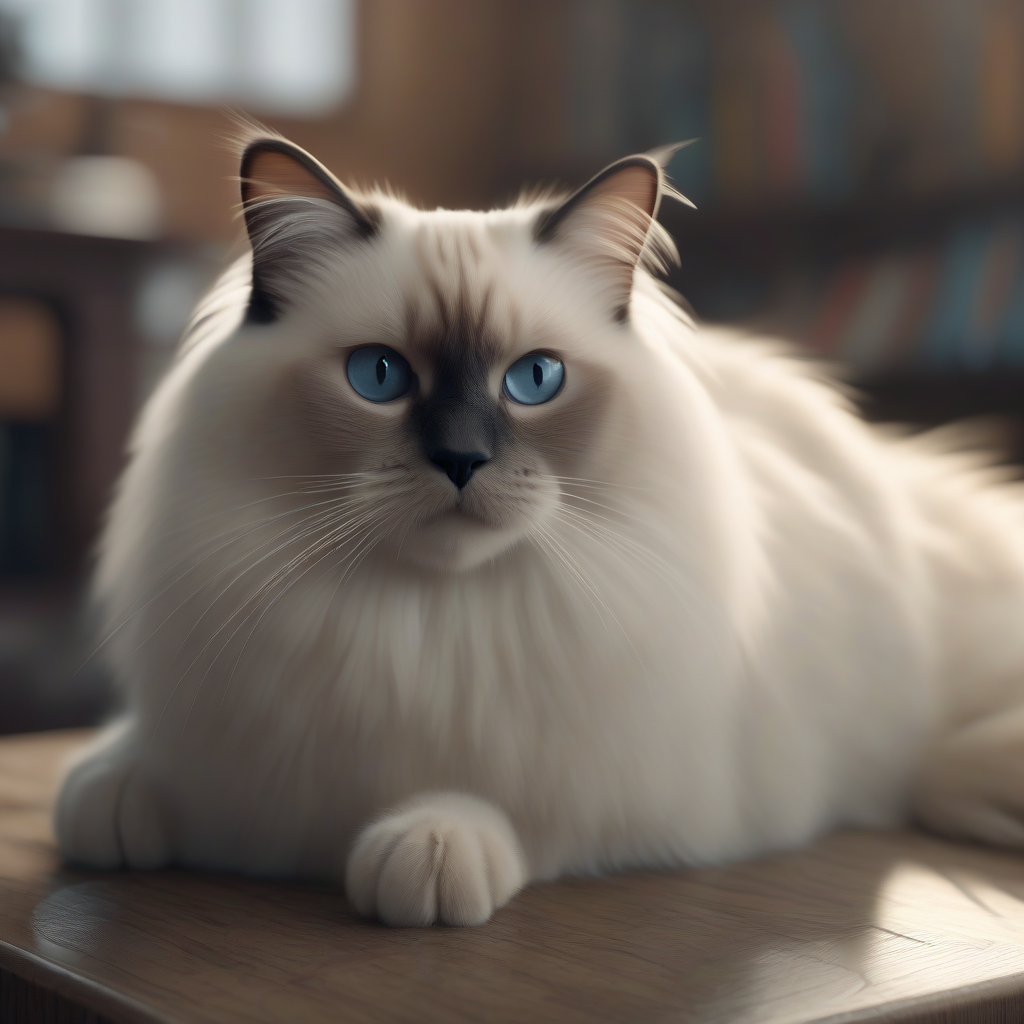
The Birman Cat: A Sacred Beauty
The Birman cat, with its unique beauty, calm demeanor, and striking sapphire blue eyes, is one of the most captivating breeds in the feline world. Its origins are intertwined with ancient temple legends, earning these graceful companions the title of "Sacred Cat of Burma." With their silky fur, distinct point pattern, and always-white "gloved" paws, Birman cats not only offer a visual spectacle but also conquer hearts with their endearing personalities. In this article, we will step into the enchanting world of Birman cats, delving into everything from their origins to their physical characteristics, temperament, care tips, and health information.
History and Origins: From Legends to Modernity
The origins of the Birman cat are deeply intertwined with an ancient legend tracing back to the remote and mysterious temples of present-day Myanmar (formerly Burma). According to the legend, long-haired, golden-eyed cats residing in the Lao-Tsun Temple were considered sacred animals of the golden goddess Tsim-Kyan-Kse. One day, while the chief monk, Mun-Ha, was in meditation, the temple was attacked, and the monk was killed. His beloved cat, Sinh, leapt onto his lifeless body. At that moment, the goddess Tsim-Kyan-Kse transferred Mun-Ha's soul into Sinh. Sinh's golden eyes instantly turned sapphire blue, his fur acquired a golden sheen, and his face, ears, legs, and tail took on the color of the earth (seal point). However, his paws, which had touched Mun-Ha's pure soul, remained pure white forever. The next morning, all the temple cats underwent this same transformation, and thus, the "Sacred Cat of Burma" was born. This legend beautifully explains the Birman cat's unique physical traits, especially its distinctive white paws, with a sacred significance.
In terms of its modern history, Birman cats made their way to the Western world in the early 20th century. It is believed that the breed originated from a pair of Birmans (one male, one female) brought to France in the 1920s. Although the male cat died on the journey to France, the female was pregnant, and the first Birman kittens were born there. The breed began to gain recognition in France and was officially accepted in France in 1925. During World War II, Birman cats faced the threat of extinction, but intensive efforts after the war successfully increased their population once again. They arrived in the United Kingdom in the 1960s and in the United States in the mid-1960s, quickly gaining popularity. Today, they are a highly cherished breed by cat lovers around the world.
Physical Characteristics: Elegance and Aesthetics
Birman cats are medium-sized, solidly built, and muscular with a sturdy body. Their most striking features include:
- Coat Structure: Their semi-long fur has a silky texture and is less prone to matting than many other long-haired breeds. They typically have a prominent "ruff" around their neck, and a slightly wavy coat can be observed on their stomach. As they lack an undercoat, their shedding is generally less than some other long-haired breeds.
- Color and Pattern: Birman cats possess a "point" pattern, similar to Siamese cats. This means that the extremities of their body (face, ears, legs, and tail) are darker in color, while the rest of the body is a lighter shade. Standard colors include seal, chocolate, blue, and lilac points. Later, red, cream, tortie, and lynx (tabby) point variations were also developed. The body color is usually lightest on the stomach and gradually darkens towards the back.
- Eyes: One of the most captivating features of Birman cats is their large, round, and vibrant sapphire blue eyes. Their gaze is gentle and expressive.
- Paws: As mentioned in the legend, the distinguishing characteristic of Birman cats is their "gloved" paws. All paws have spotless and symmetrical white fur, as if they are wearing white gloves. On the rear paws, this white extends upwards at the back of the paw, forming a "laces" or "socks" pattern. These white paws are a defining and essential trait of the breed.
- Head Structure: They have a head with rounded contours, strong jaws, and full cheeks. The nose is medium in length and slightly Roman-arched.
- Tail: Their tail is medium in length, proportionate, and well-plumed with fur.
Temperament and Personality: Affectionate and Calm Companions
Birman cats are renowned not only for their beauty but also for their wonderful personalities. They are gentle, affectionate, and highly social cats.
- Calm and Docile: They generally possess a calm disposition. While they have energy, they are not hyperactive or destructive. They contribute to a peaceful atmosphere in the home.
- People-Oriented: They are extremely devoted to their owners and relish human interaction. They prefer to be in the same room as you, sleeping on your lap or beside you.
- Social and Friendly: They are generally not shy with new people and warmly welcome guests. They get along quite well with children and other pets (including dogs), making them an ideal choice for busy families.
- Intelligent and Curious: Birmans are intelligent and enjoy exploring their surroundings. They typically enjoy playing with toys or observing what's happening around them.
- Vocalization: They mostly have a soft and melodic meow. They are not prone to loud or constant vocalizations.
Care Tips: A Healthy and Happy Birman
While Birman cats require specific care due to their semi-long fur, their grooming is relatively easier compared to some other long-haired breeds.
- Coat Care: Thanks to their silky fur texture, they are not very prone to matting. Brushing them once or twice a week is sufficient to remove dead hair and keep their coat healthy. Regular brushing will also help reduce shedding.
- Dental and Nail Care: Regular dental brushing is important for their oral health. Brushing several times a week with cat-specific toothpaste and a brush helps prevent tartar buildup. Regular trimming of their nails prevents damage to furniture and is important for the cat's well-being.
- Ear and Eye Care: Their ears should be checked regularly and gently cleaned with a damp cloth if necessary. Any discharge accumulating around their eyes should also be cleaned.
- Nutrition: Feeding them a high-quality, balanced cat food is vital for their health. The choice of food should be appropriate for their age, activity level, and health status. They should always have access to clean, fresh water.
- Living Environment: Although Birman cats are not overly active, they enjoy climbing and being in high places. Scratching posts, cat trees, and various toys will help keep them physically and mentally stimulated. They thrive in a safe and loving environment.
Health: A Conscious Approach
Birman cats are generally a healthy breed, with an average lifespan ranging from 12 to 16 years. However, like all breeds, Birman cats can have some genetic predispositions:
- Hypertrophic Cardiomyopathy (HCM): This is the most common heart disease in cats. Early diagnosis is possible through regular veterinary check-ups and, if necessary, screening tests.
- Polycystic Kidney Disease (PKD): A genetic disease characterized by the formation of cysts in the kidneys. Responsible breeders screen parent cats for this condition.
- Corneal Dermoid: A condition where a piece of skin-like tissue containing hair grows on the cornea of the eye. It can usually be treated with surgical intervention.
- Spinal Muscular Atrophy (SMA): A very rare neuromuscular disease that leads to muscle weakness.
The risk of these conditions is generally low when cats are acquired from a responsible breeder. Regular veterinary check-ups, vaccinations, and parasite prevention are crucial for your Birman cat to lead a long and healthy life.
Why Should You Adopt a Birman Cat?
The Birman cat is an excellent choice for anyone seeking a calm, affectionate, and social companion. Their ability to get along well with children and other pets makes them ideal for families. Their elegant appearance and gentle disposition are also appealing to those seeking a peaceful atmosphere at home. They are sacred companions who will become both a part of your home and fill a corner of your heart.
Conclusion
The Birman cat is truly a special breed, embodying grace from its legendary origins, striking beauty, and a loving personality. With their blue eyes, silky fur, and those unique white paws, they inspire admiration at every glance, while their calm and affectionate nature brings warmth and joy into homes. If you are considering adding a noble companion to your life, the Birman cat is ready to offer you a lifetime of friendship and unconditional love. They are not just pets; they are living representatives of a sacred heritage.