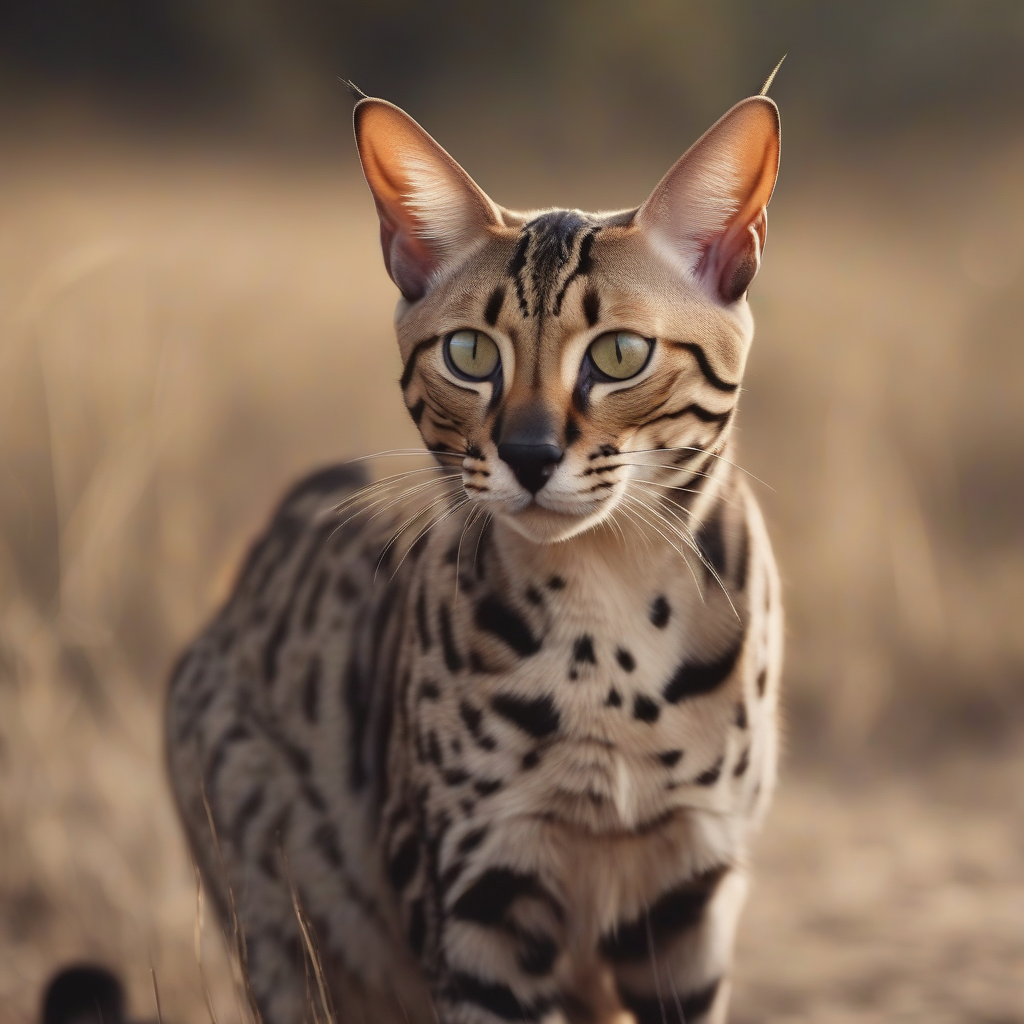
Savannah Cat: Wild Beauty and Your Loyal Companion at Home
Among cat enthusiasts, many breeds stand out for their exotic appearances and unique temperaments. The Savannah cat is one of these special breeds. Resulting from the crossbreeding of an African serval cat and a domestic cat, Savannah cats possess both wild beauty and incredible intelligence and loyalty. In this article, we will delve into the origins, characteristics, temperament, and home life of these fascinating felines.
Origins and History
The origins of the Savannah cat date back to the late 1980s. It is known to have first appeared as a result of crossbreeding a domestic Siamese cat with an African serval cat. This crossbreeding occurred as a natural coincidence, leading to the birth of this unique cat breed. It can be said that the aim was to combine the appearance and excitement of a wild cat with the loyalty and affection of a domestic cat.
This crossbreeding process continued from generation to generation, resulting in Savannah cats of different filial generations. F1 (first generation), F2, F3, and subsequent generations differ in the intensity of their ancestral wild traits. Generally, the first generations exhibit more wild characteristics, while later generations become more domesticated and human-oriented.
Physical Characteristics
At first glance, Savannah cats have a striking appearance, reminiscent of a wild leopard. Their long and lean bodies, long legs, large and erect ears, and characteristic spotted coats distinguish them from other domestic cats. Their fur is typically short to medium in length, with variations in color and pattern. The most common pattern is dark brown or black spots on a golden background.
Their size varies considerably depending on the influence of their ancestors. F1 and F2 generations, especially males, can be quite large, reaching up to 20 kilograms. While their size tends to approach domestic cat standards in later generations, they are generally larger than the average domestic cat. Their eyes are usually large and almond-shaped; their color can be green, gold, or brown.
Temperament and Behavior
The temperament of Savannah cats reflects both the intelligence of the wild and the affectionate nature of a domestic cat. They are highly intelligent, curious, and energetic felines. Most Savannah cats love to climb to high places and explore. They are among the rare cat breeds that enjoy playing with water; some may even enjoy taking baths.
They are social creatures and form deep bonds with their families. They enjoy playing with and interacting with their owners. Due to their intelligence, they can learn commands, and some can even be trained to walk on a leash like dogs. However, their high energy levels mean they require plenty of play and mental stimulation. Playing with toys, climbing trees, and an enriched environment are essential for their happiness and stability.
Their compatibility with other pets and children depends on their socialization process and individual personalities. Savannah cats that are socialized from an early age generally get along well with other animals and people. However, due to their strong hunting instincts inherited from their wild ancestors, caution may be necessary when small pets are involved.
Care
Caring for Savannah cats can require a bit more attention than for other domestic cats. Due to their high energy, it is important to provide them with ample space to move and opportunities for exercise. Climbing trees, toys, and interactive play help them expend their energy in a healthy way.
For their diet, a balanced diet rich in high-quality protein is recommended. Especially for first-generation Savannah cats, they may have specific dietary needs inherited from their wild ancestors. It is important to consult with your veterinarian to create the most suitable diet plan for your cat.
Grooming is generally straightforward. Their short to medium-length fur requires occasional brushing a few times a week to manage shedding. Basic cat care routines such as ear cleaning and nail trimming should also be performed.
Considerations Before Adopting a Savannah Cat
Savannah cats are not suitable pets for everyone. Given their high energy, intelligence, and specific needs, they should be adopted by individuals who can dedicate sufficient time, attention, and living space.
- Time and Attention: Savannah cats crave attention and interaction. They do not enjoy being left alone for extended periods during the day.
- Living Space: Providing a spacious and enriched living environment with climbing areas is crucial.
- Training: While they are intelligent and open to training, it requires patience and consistency.
- Cost: Savannah cats are generally more expensive, and their care may require specialized products.
- Legality: In some countries or regions, owning or keeping Savannah cats may be subject to legal regulations. It is important to research the relevant legal regulations before adoption.
Conclusion
The Savannah cat, with its wild beauty, intelligence, energy, and loyalty, is a captivating pet. If you are looking for an adventurous, intelligent, and affectionate companion, a Savannah cat could be an excellent choice for you. However, fully understanding the needs of this special breed and providing them with a suitable environment is essential for a happy and healthy coexistence.
At Sen YuDo Pet, we understand that every feline friend is unique, and we believe that special breeds like the Savannah cat deserve to live in a loving and appropriate environment.