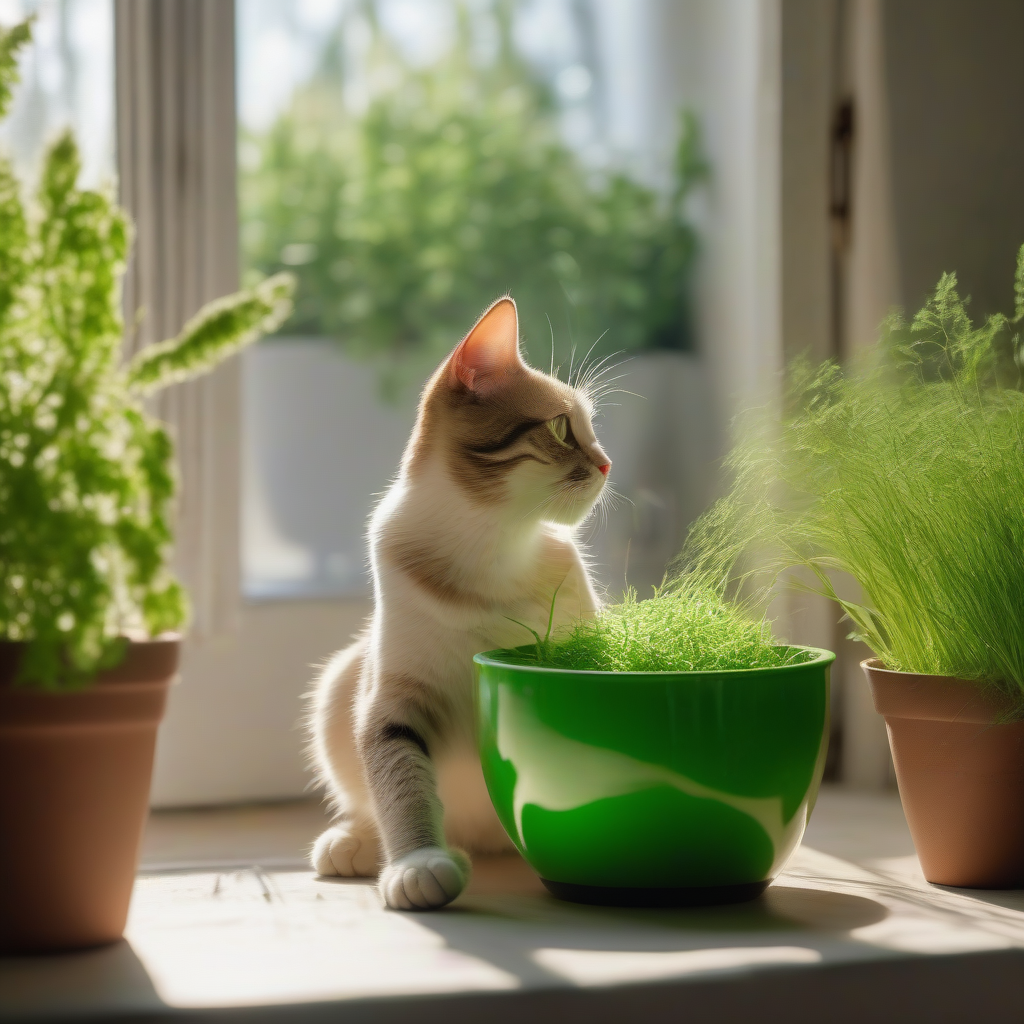
Green Your Home Without Harming Your Feline Friend: A Safe Spring Plant Guide for Your Cat
As we enter March 2026, the fresh energy of spring and nature's reawakening envelop us all. We naturally want to bring this energy indoors by greening our homes. However, for pet owners, this can pose some risks to the health of our furry friends. Cats, with their curious nature and tendency to chew on plants, can easily be affected by household greenery. At YuDo Pet, we've prepared this guide to help you safely green your home while protecting your cat's health.
Why do cats eat plants? This is usually an instinctive behavior. Cats may be drawn to plants to alleviate stomach discomfort, aid in passing hairballs, or simply out of playfulness and curiosity. This seemingly innocent act can lead to serious health issues if the wrong plants are involved.
Safe Spring Plants for Your Cat
You don't have to compromise your cat's health to fill your home with the vibrancy of spring. Here are some popular plants that are entirely safe for your cat and can be kept in your home with peace of mind:
Examples and Care Tips
- Catnip (Nepeta cataria) and Cat Grass (Various grasses): These plants are grown specifically for cats and satisfy their chewing instincts. Catnip can help your cat relax or become energetic, while cat grass aids digestion and helps prevent hairballs. They grow easily and should be refreshed frequently.
- Areca Palm (Dypsis lutescens): A frequently chosen elegant palm for indoor spaces, it is completely safe for cats and also has air-purifying qualities. It thrives in bright, indirect light.
- Orchid (Phalaenopsis spp.): Ornate and beautiful, orchids are fortunately non-toxic to cats. Their blooms last a long time and add a touch of elegance to any home.
- African Violet (Saintpaulia spp.): Bringing cheer to indoor spaces with their vibrant colors, African violets pose no risk to your cat. They remain vibrant for a long time with regular, moderate watering.
- Blue Star Fern (Phlebodium aureum 'Blue Star'): Visually appealing and relatively easy to care for, this fern species is another safe option for cats. It prefers humid environments.
- Boston Fern (Nephrolepis exaltata): Another popular and safe fern species. It's also known for its air-humidifying properties and is a pet-friendly choice.
These plants allow you to beautify your home while ensuring your cat's safety.
Toxic Spring Plants for Cats
Unfortunately, many popular spring plants carry significant health risks for cats. Any part of these plants (leaves, flowers, bulbs, pollen) can lead to poisoning if ingested by your cat.
Popular Plants to Avoid
- Lily (Lilium spp.) and Easter Lily (Lilium longiflorum): Extremely toxic to cats. Even a small amount can cause kidney failure. Even lily pollen is dangerous.
- Tulip (Tulipa spp.) and Daffodil (Narcissus spp.): The bulbs of these plants are the most toxic parts for cats. Ingestion can lead to severe vomiting, diarrhea, and heart problems.
- Hydrangea (Hydrangea spp.): Its flowers and leaves are toxic to cats and can cause gastrointestinal upset.
- Azalea (Rhododendron spp.): Even in small amounts, it is highly toxic to your cat and can lead to severe symptoms such as vomiting, diarrhea, weakness, and even heart failure.
- Aloe Vera: Although beneficial for humans, Aloe Vera contains toxic compounds for cats that can act as a laxative and cause symptoms like vomiting and diarrhea.
- Nightshade Family (Solanaceae family - certain plants): Some nightshade plants, like the green parts of tomato plants or raw potatoes, can also be toxic to cats.
- Poinsettia (Euphorbia pulcherrima): While once believed to be highly poisonous, current information indicates it is mildly toxic, usually only causing mild gastrointestinal upset. Still, it's wise to be cautious.
Symptoms and What to Do in an Emergency
If you suspect your cat has ingested a toxic plant, watch for the following symptoms:
- Vomiting and diarrhea
- Loss of appetite
- Lethargy, drowsiness
- Excessive drooling
- Difficulty breathing
- Tremors or seizures
- Behavioral changes
If you notice any of these symptoms or are certain your cat has come into contact with a toxic plant, contact your veterinarian immediately. If possible, take a sample or photo of the plant your cat ate or touched with you.
Smart Ways to Protect Your Home and Cat
You can take several proactive steps to prevent your cat from being harmed by plants:
Making Plants Inaccessible
- Hanging Baskets: Keep your plants in hanging baskets or on high shelves where your cat cannot reach them.
- Terrariums and Enclosed Spaces: Display your plants inside enclosed terrariums or glass cabinets.
- Cat-Proof Areas: Create a room filled with plants that is off-limits to cats.
Alternative Enrichment
To healthily redirect your cat's chewing and playing instincts, provide plenty of catnip, cat grass, or safe chew toys. Scratching posts and interactive toys also help them expend their energy.
Encouraging Catnip or Cat Grass
Consistently having safe catnip or cat grass available in your home can reduce your cat's interest in other plants. Drawing your cat's attention to these safe alternatives satisfies their natural instincts while keeping them away from potential dangers.
Conclusion
While bringing the freshness of spring into your home, your cat's safety should be your top priority. By avoiding toxic plants and opting for safe alternatives, you can create a peaceful and green living space for both yourself and your furry friend. Remember, when in doubt, always choose the safest option and avoid bringing unknown plants into your home or keep them out of your cat's reach. At YuDo Pet, we are always here to help your cat have a healthy and happy spring!