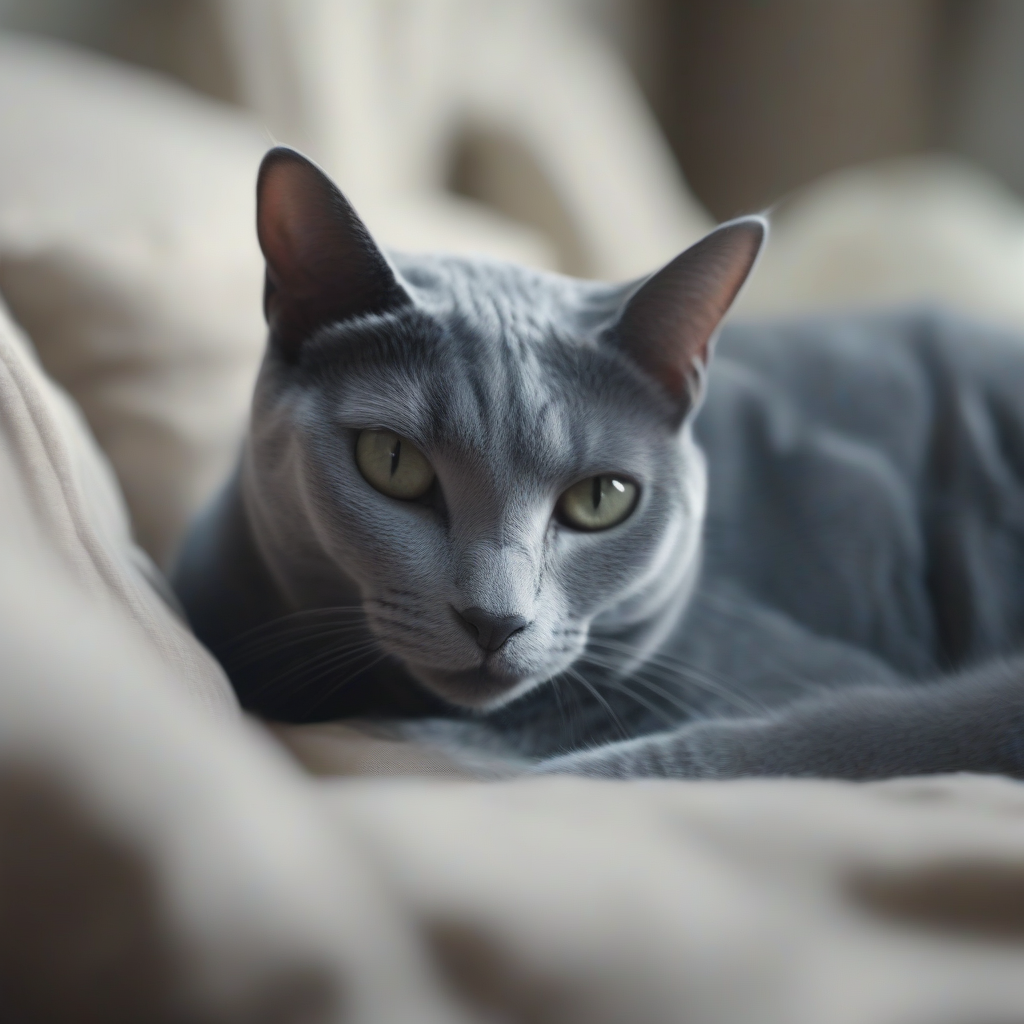
Russian Blue: Where Elegance Meets Serenity
One of the most noble and elegant members of the feline world, the Russian Blue cat has captured the hearts of many cat lovers with its unique beauty and calm disposition. This special breed, which spread from the cold lands of Russia to the world, draws attention not only for its appearance but also for its intelligence and loving nature.
History: The Silent Beauty of the North
The origins of the Russian Blue cat can be traced back to the mid-19th century. This breed, believed to have developed naturally in the harsh climate of Russia's Arkhangelsk region, adapted to challenging weather conditions thanks to its thick, double-layered coat. First introduced at a cat show in England in 1860, the Russian Blue was known as the 'Arkhangelsk cat' at the time. The breed's standardization and acquisition of its current appearance occurred over time. Although its popularity declined after World War II, this precious breed managed to survive to the present day through the efforts of passionate breeders.
Character: Calm, Intelligent, and Affectionate
Russian Blues are generally calm, gentle, and independent. Rather than being overly active and energetic, they prefer to spend peaceful time in their own world. However, this calmness does not make them disinterested or unplayful cats. They are intelligent and curious; they enjoy exploring their surroundings and interacting with their owners. They are very loyal and affectionate towards their owners. They tend to bond more strongly with one person but can also be gentle and compatible with all family members. As they dislike noisy environments and sudden movements, quieter and calmer home environments are ideal for them. They can be a little shy with strangers, but they can become quite social once they trust over time.
Physical Characteristics: The Blue Hue of Elegance
The most striking feature of Russian Blue cats is their short, dense, and soft fur. Their coat color, as the name suggests, ranges from a bright blue-gray to a deep gunmetal gray. The tips of their fur often have a silvery sheen, giving them a unique shimmer. With a slender and elegant body structure, Russian Blues are notable for their long legs, slender tail, and wedge-shaped head. One of their most captivating features is their bright and vibrant green eyes. These green eyes create a stunning contrast with their blue-gray fur.
Care Needs: Minimal but Diligent
Caring for Russian Blue cats is generally quite easy. Their short and dense fur remains adequately maintained with brushing once or twice a week. This regular brushing helps to remove dead hair, reduce hairball formation, and maintain skin health. Their shedding level is moderate. Routine checks such as eye and ear cleaning are also important. Nail trimming should be done regularly, and food and water bowls should always be kept clean. Choosing a high-quality and balanced diet is also important for the cat's overall health.
Health Issues and Genetic Predispositions
Russian Blues are generally a healthy breed and have a long lifespan (15-20 years). However, like any breed, they can have certain genetic predispositions. One of the most commonly known health issues is Glycogen Storage Disease IV (GSD IV). This is a rare genetic disorder affecting the nervous system. Regular veterinary check-ups and genetic testing can help in the early diagnosis of such potential problems. In general, a healthy diet, regular exercise, and a loving environment are sufficient for Russian Blues to live a long and healthy life.
Living with a Russian Blue at Home
Due to their calm and gentle nature, Russian Blue cats are generally happy in quiet and peaceful home environments. They can also be suitable for families with children, provided the children are taught to treat the cat gently. They generally get along well with other pets, especially if socialized at an early age. Thanks to their intelligence, they can learn simple commands and enjoy playing. It is important to keep them mentally stimulated with toys or interactive games.
In conclusion, the Russian Blue cat is a wonderful companion with its elegance, serenity, intelligence, and affectionate nature. If you are looking for a quiet, gentle, and loyal cat, the Russian Blue cat might be the perfect choice for you.