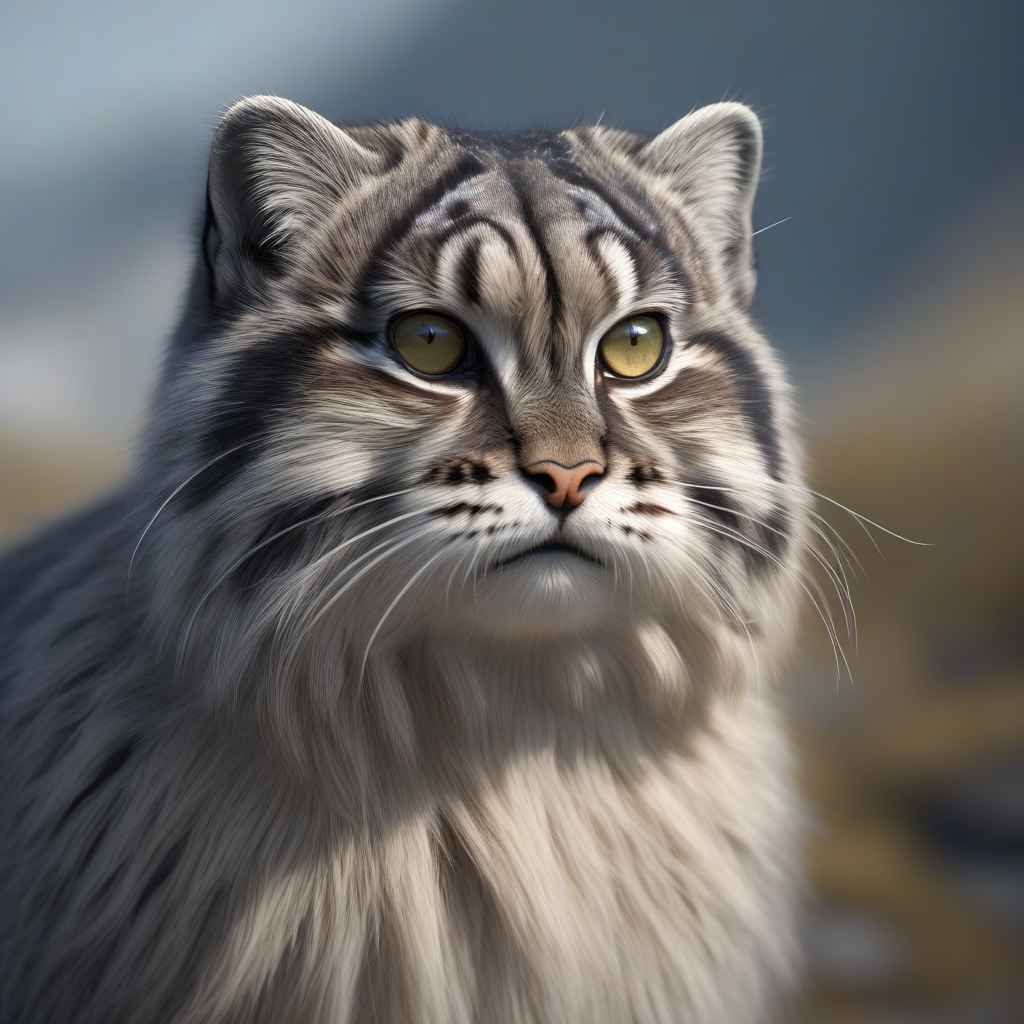
Pallas's Cat: Europe's Mysterious Mountain Dweller
Roaming the vast steppes of the European continent, along the foothills of high mountains, and across rugged terrains, there is a cat species that appears to have emerged from a legend: the Pallas's Cat (Otocolobus manul). Commonly known as the 'Manul,' this enchanting creature attracts the interest of both nature lovers and cat enthusiasts with its distinctive appearance and mysterious lifestyle. Unfortunately, however, the Pallas's Cat is listed among endangered species, and its conservation is of great importance.
The Unique Beauty and Physical Characteristics of the Pallas's Cat
While similar in size to domestic cats, the Pallas's Cat distinguishes itself from them with its unique physical characteristics. Its body is robust and muscular, typically measuring 45-65 cm in length, with a tail of about 20-30 cm. Its most striking features are its large, round head and short, thick legs. Its ears are relatively small and set close together, giving it a charmingly 'grumpy' expression that contributes to its character. White markings around its eyes and under its chin give it a masked appearance. However, its most remarkable feature is its long, dense, and thick fur. This heavy coat protects them from icy winds and freezing temperatures, especially during the cold winter months. The fur is typically in shades of gray, with yellowish-brown stripes and spots. These colors provide them with excellent camouflage in rocky and barren landscapes.
The eyes of the Pallas's Cat are also quite impressive. Usually amber or green in color, its eyes are large and round. These eyes help them spot their prey even in low-light conditions.
Habitat and Behavior
The natural habitat of the Pallas's Cat spans a wide geographical area, from Eastern Europe to Central Asia. They are primarily found in mountainous regions covered with steppes and grasslands in countries such as Kazakhstan, Mongolia, the Siberian region of Russia, China, and Afghanistan. They can typically be found at altitudes of 3000-5000 meters above sea level.
These cats are generally solitary and territorial creatures. They spend their days hiding in their dens or in inaccessible rocky outcrops and caves. Their active periods are usually at dawn and dusk. Their main food sources include small rodents, rabbits, birds, and insects. They are exceptional hunters and can detect their prey from afar thanks to their sharp senses.
One of the most interesting behaviors of the Pallas's Cat is their limited vocalization ability. Instead of meowing, they typically make sounds like hissing, growling, and sometimes even roaring. This characteristic reinforces their silent and mysterious nature in the wild.
Threats and Conservation Efforts
Unfortunately, the life of the Pallas's Cat is under threat. The biggest threat is the shrinking and destruction of their habitat. Agricultural, livestock, and mining activities are destroying their natural homes. Furthermore, hunting for their fur has also played a significant role in the decline of the species. The fight against poisoned bait also negatively affects Pallas's Cat populations, as these baits are often set for non-target prey, but Pallas's Cats can also be exposed to this poison.
In the face of these threats, many international and local organizations are carrying out significant conservation efforts for the Pallas's Cat. These efforts include protecting their habitats, preventing poaching, raising public awareness, and conducting scientific research to better understand the Pallas's Cat's natural behaviors and needs. In some regions, projects are being implemented in collaboration with local communities to protect Pallas's Cat habitats and increase the species' population.
Conclusion
The Pallas's Cat is a silent and mysterious heritage of Europe's wild nature. Its unique appearance, ability to survive in harsh conditions, and the struggle for the protection of its habitats remind us that we must get to know this magnificent cat better and protect it. By protecting them, we can ensure that this magical creature continues to exist for generations to come.