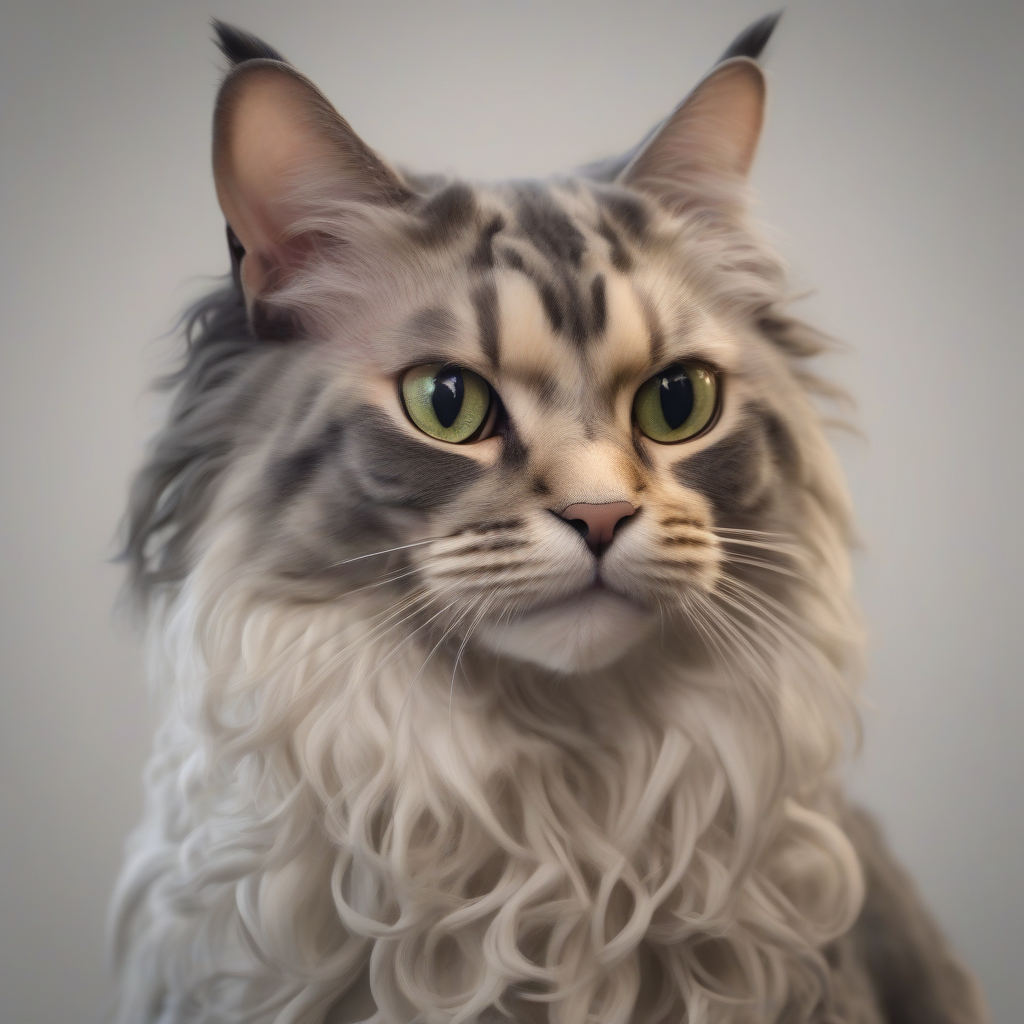
In the world of felines, while many breeds are celebrated for their distinctive beauty and personalities, some have become mysterious memories, hidden within the dusty pages of history. The Oregon Rex cat is one such forgotten legacy. Discovered in the mid-20th century in the state of Oregon, USA, this unique breed, despite its short existence, holds a significant place in the history of cat genetics and breeding. At Sen YuDo Pet, we wish to remind you of this lost beauty and share its story.
Origin and History of the Oregon Rex Cat
The story of the Oregon Rex cat began in 1955, on a farm in Oregon, with the birth of a curly-haired kitten. This kitten, born to parents with normal fur, was the result of a spontaneous genetic mutation. This small cat became the founder of the Oregon Rex breed, named after both its home state and its distinctive curly coat. Initially referred to simply as 'Rex,' the breed later adopted the name 'Oregon Rex' to differentiate it genetically from other Rex breeds such as the Cornish Rex or Devon Rex.
The uniqueness of the breed lay in the recessive gene (sometimes referred to as the 'r' gene) responsible for its curly fur, which was distinct from the genes found in other Rex breeds. This genetic difference allowed the Oregon Rex to be recognized as a separate and unique breed. In the early 1960s, the Oregon Rex gained recognition from the Cat Fanciers' Association (CFA), and for a brief period, it was considered a promising new breed.
Physical Characteristics: The Elegance of Curly Fur
The Oregon Rex was distinguished by its most prominent feature: its curly, wavy, or rippled coat. These hairs lay close to the body and had a soft, velvety texture. Shedding was reportedly less than that of other breeds, making them a potential option for individuals with allergies. There were no standard restrictions regarding color and pattern, which made them diverse and visually appealing.
As a medium-sized cat, the Oregon Rex possessed a muscular and elegant physique. They had long legs and a delicate tail. Their eyes were typically rounded or oval and could be observed in a variety of colors. Their overall appearance suggested an athletic and agile build.
Temperament and Personality: Affectionate and Intelligent Companions
Oregon Rex cats were known not only for their distinctive appearance but also for their affectionate and friendly personalities. They were remarkably intelligent and playful felines. They enjoyed forming strong bonds with humans, loved attention, and preferred to be near their owners, making them wonderful family pets.
They were social creatures that typically got along well with other pets and children. Thanks to their active and curious nature, they enjoyed playing, climbing, and exploring around the house. Their high intelligence meant they could learn simple commands and be easily engaged with interactive toys.
Care and Health
The coat care for Oregon Rex cats was relatively easy due to their short and curly fur. Weekly brushing was generally sufficient to manage shedding and keep their coats healthy. While they were generally considered a healthy breed, the narrowness of their gene pool could have increased their susceptibility to certain health issues. Unfortunately, due to the breed's extinction, long-term health data is limited.
Reasons Behind Its Extinction
The story of the Oregon Rex is a tragic lesson that underscores the importance of genetic diversity in cat breeding. Although it initially held promise, the breed ultimately became extinct, with several key reasons contributing to its demise:
1. Unique Genetic Mutation: The curly coat gene of the Oregon Rex was genetically distinct from those of other Rex breeds. This meant that breeding an Oregon Rex with a Cornish Rex or Devon Rex did not consistently produce curly-coated offspring. Cross-breeding attempts failed to yield the desired results and were unsuccessful in broadening the gene pool. 2. Insufficient Gene Pool: Since the breed originated from a single genetic mutation, it had an extremely small gene pool. This situation inevitably led to inbreeding, potentially increasing the risk of genetic diseases and poor health. 3. Breeding Challenges: Limited genetic knowledge and incompatibility with other Rex breeds made it difficult for breeders to sustain the breed. Breeding programs were unsuccessful, and finding new bloodlines became impossible. 4. Lack of Popularity and Distribution: In its early years, the breed did not achieve sufficient popularity and remained confined to a limited geographical area. Its lack of widespread recognition and distribution led to an even narrower gene pool.
By the early 1970s, the Oregon Rex line had completely died out. The cat world had lost a unique and affectionate breed.
Legacy and Its Importance Today
Although the Oregon Rex cat is no longer physically with us, its story offers important lessons for modern cat breeding and genetics. It highlights the vital role of genetic diversity in preserving cat breeds and demonstrates how challenging it can be to sustain a breed based on a single mutation.
At Sen YuDo Pet, we believe that every cat breed, whether rare or common, has its unique value. The Oregon Rex was once an existing, curly-coated, affectionate companion who left behind a loving legacy. Its story guides us towards responsible breeding and emphasizes the importance of genetic research for the health and sustainability of future cat breeds.