March 2026's Rising Trend: 7 Secrets to Minimalist Living in Cat-Friendly Homes with Japanese Philosophy! Create a Serene & Organized Space with Your Feline Friend
As we step into March 2026, the clutter of modern life and the constant urge to acquire possessions negatively impact the quality of life for many of us. Especially in homes we share with our furry companions, cat toys, scratching posts, beds, and various accessories quickly accumulate, creating visual chaos and making cleaning and organizing a challenge. This is where the rising lifestyle philosophy of minimalism offers a revolutionary solution for cat-friendly homes. However, by taking this trend a step further and blending it with the profound principles of Japanese philosophy, you can fundamentally transform not only your home but also your bond with your cat and your overall quality of life. Are you ready to create a clutter-free, functional, and aesthetically pleasing living space where your cat can also find peace alongside you?
Why Minimalism in Cat-Friendly Homes? The Benefits of a Clutter-Free Space for You and Your Feline Friend
Adopting a minimalist lifestyle offers numerous advantages, especially for cat owners. Cats, by nature, prefer organized and predictable environments. Excessive clutter can restrict their exploration areas, increase their stress levels, and even lead to accidents. A minimalist home, on the other hand:
- Reduces Your Cat's Stress: Fewer items provide wider and clearer spaces for your cat to roam, play, and rest comfortably. This allows them to exhibit their natural behaviors and reduces anxiety.
- Facilitates Cleaning and Hygiene: Cats shed fur, can leave food particles, or track litter outside their box. Fewer items speed up cleaning processes and improve your home's hygiene level.
- Increases Safety: Unnecessary items can mean objects that can tip over or small particles your cat might ingest. A minimalist approach eliminates potential hazards.
- Encourages Conscious Consumption: It helps you understand what you truly need for your cat and prevents unnecessary impulse purchases.
Now, let's explore the 7 secrets of minimalist living in cat-friendly homes, enriched by the rooted principles of Japanese philosophy, making it March 2026's most notable trend.
March 2026's Viral Trend: 7 Secrets to Minimalist Living in Cat-Friendly Homes with Japanese Philosophy
Japanese culture is rich with life philosophies that combine aesthetics, functionality, and spiritual balance. By adapting these principles to our cat-friendly homes, we can create a better environment for both ourselves and our furry companions.
1. Danshari (断捨離): The Art of Decluttering
Danshari means "refuse, dispose, separate" and is the practice of freeing your living space from unnecessary items. In cat-friendly homes, this applies to unused toys, broken scratching posts, old beds, or any accessories that no longer capture your cat's interest. Application: Pick up each item and ask yourself: "Does this truly add value to my cat's/my life?" or "Does my cat use this and enjoy it?" If the answer is no, donate, recycle, or dispose of the item. Remember, cats, like humans, can feel overwhelmed by excessive clutter. A clean and organized space contributes to their mental clarity as well.
2. Kakeibo (家計簿): Conscious Spending and Planning
Kakeibo is a widespread Japanese practice of financial discipline and conscious spending. When embracing minimalism in a cat-friendly home, distinguishing between "needs" and "wants" when purchasing new cat items is crucial. Application: Set a budget for your cat item purchases. Before each acquisition, consider: "Will this product genuinely contribute to my cat's health, happiness, or safety?" Opt for durable, long-lasting, and sustainably made products instead of single-use or easily broken ones. This protects not only your wallet but also the environment.
3. KonMari (こんまり): Items That Spark Joy
Marie Kondo's minimalist philosophy advocates keeping only items that "spark joy." This principle is perfect for cat-friendly homes. Application: Review every cat item in your home. Does your cat genuinely enjoy playing with this toy? Does it sleep peacefully in this bed? If an item doesn't bring noticeable joy to your cat's life or has lost its function, it's time to say goodbye. Create a living space filled with few, but essential items that your cat truly loves. Reduce visual clutter.
4. Wabi-Sabi (侘寂): The Beauty of Imperfection and Naturalness
Wabi-Sabi is a Japanese aesthetic that embraces transience, imperfection, and incompleteness, focusing on natural beauty. In a cat-friendly home, this philosophy teaches you to move away from perfectionism and embrace the natural marks that your cat's presence brings. Application: A corner of the couch scratched by your cat, slight wear and tear from play, or a cat bed faded by sunlight... These are traces of moments shared with your cat. Choose cat furniture made from natural materials (wood, cotton, jute); these materials age beautifully and are healthier for your cat. Instead of chasing perfection, appreciate the organic changes that your cat's presence brings.
5. Shinrin-Yoku (森林浴): Integrating with Nature at Home
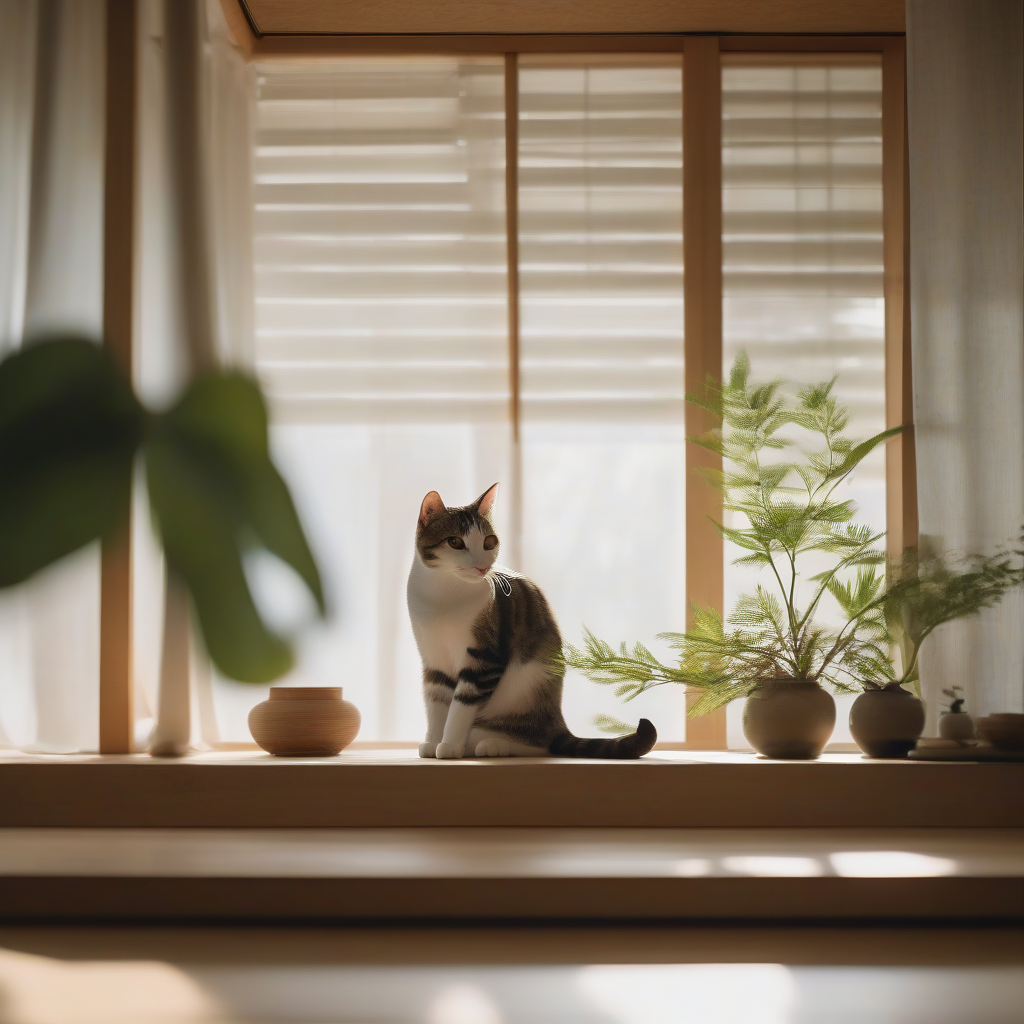
Shinrin-Yoku, meaning "forest bathing," emphasizes the mental and physical benefits of being in nature. Cats also love being close to nature; however, this doesn't necessarily mean going outdoors. Application: Keep cat-safe (non-toxic) plants in your home. Allow natural light to enter and ensure regular ventilation to support fresh air circulation. Create a safe window perch or cat shelf where your cat can watch the outside world and bask in the sun. This way, your cat can live in a serene environment, in harmony with natural rhythms.
6. Ikigai (生き甲斐): Finding Your Life's Purpose
Ikigai means "reason for being" or "life's purpose." In cat-friendly minimalist homes, Ikigai allows you to redefine the depth and purpose of your relationship with your cat. Application: Enhance the quality of the time you spend with your cat. Instead of merely being in the same physical space, interact with them consciously. Play, groom, gently touch them, and listen to their purrs. View your cat not just as a "pet" but as a "companion" who adds meaning to your life. This allows you to fill the empty spaces created by minimalism with more meaningful memories.
7. Ma (間): The Power of Space and Interval
Ma is a Japanese concept referring to the importance given to the empty space or interval between two things. In a minimalist home, Ma is critical for your cat's freedom of movement and mental serenity. Application: Leave clear spaces in your home where your cat can comfortably roam, run, jump, and rest. Position furniture close to walls or utilize multi-functional, space-saving cat furniture (wall shelves, cat tunnels) to make use of vertical space. Avoid excessive decoration. Remember, sometimes the most powerful impact comes from the emptiness itself. This emptiness provides a canvas for your cat to explore freely and find its own rhythm.
Conclusion: A Brand New Quality of Life with Your Cat Through Minimalism and Japanese Philosophy
In March 2026, minimalist living in cat-friendly homes goes beyond being just a decor trend; it's a lifestyle transformation. By integrating these 7 principles of Japanese philosophy into your life and your cat's living space, you can create a more organized, peaceful, and meaningful world for both yourself and your furry companion. A clutter-free home, filled with consciously chosen items, will help your cat satisfy its instincts, experience less stress, and strengthen its bond with you. Embrace this viral trend and enjoy the peace and order with your cat!