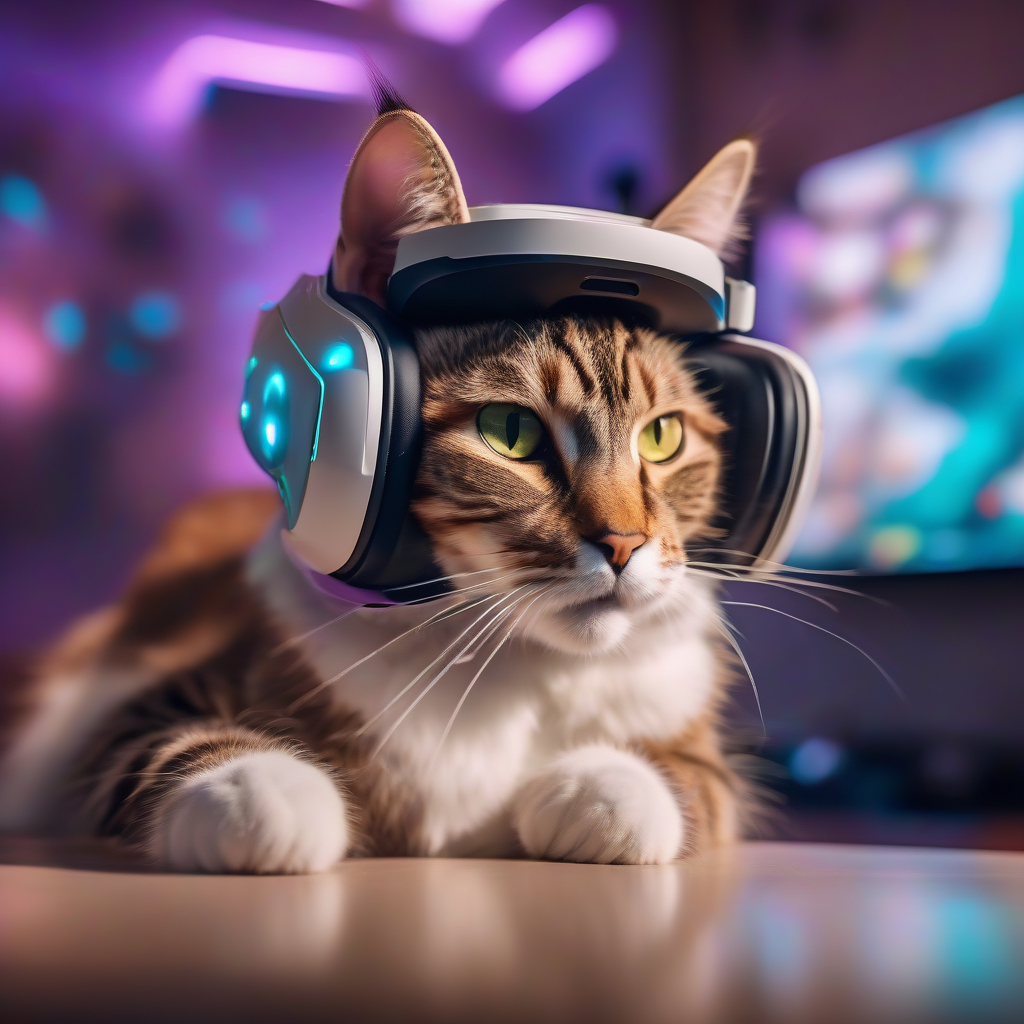
March 2026's Viral Discovery: Maximize Your Cat's Mental Stimulation with a Virtual Reality Experience!
Pet technologies are constantly evolving, and as of March 2026, a groundbreaking trend for our feline friends is on the rise: Virtual Reality (VR) experiences! VR toys, which expand our furry companions' world, enhance their mental capacities, and offer them new exploration areas in a safe environment, are rapidly gaining popularity among cat owners. At YuDo Pet, we are closely examining this exciting trend and sharing with you how your cat can be happier, more active, and smarter with VR.
Why is a VR Experience Important for Cats? The New Dimension of Mental Stimulation
Cats are naturally curious and exploration-driven animals. Especially for indoor cats, being deprived of the rich stimuli offered by the outside world can be boring. While traditional toys and scratching posts suffice to a certain extent, the search for innovative solutions for continuous and varied mental stimulation is inevitable. This is where virtual reality comes in. VR offers cats limitless virtual environments where they can simulate natural behaviors such as hunting, exploration, socialization (in a virtual setting), and problem-solving. This helps them maintain their mental agility, reduce stress levels, and improve their overall quality of life.
What Do VR Toys Offer? Virtual Paradises for Your Furry Friend
Today's VR cat toys go far beyond simple laser games. Thanks to advanced sensors and artificial intelligence integration, they offer personalized virtual environments that dynamically adapt to your cat's movements and reactions.
- Virtual Hunting Scenarios: Your cat can chase butterflies in a forest, try to catch fish swimming in a fish pond, or watch small mice in a meadow. These scenarios allow them to satisfy their hunting instincts in a safe and controlled manner.
- Exploration-Themed Worlds: They can explore the interior of a spaceship, swim in the depths of an ocean, or discover virtual cities in different climates. This breaks monotony and feeds your cat's sense of curiosity.
- Interactive Puzzles: Puzzles that they can solve by interacting with virtual objects challenge their mental capacity and develop their problem-solving skills.
- Virtual Socialization: Some advanced VR platforms allow cats to interact with other virtual cats or animated characters, helping them fulfill their social needs in a virtual environment.
Choosing the Right VR Experience for Your Cat: What to Consider?
There are many VR cat toys and platforms on the market. It is important to choose one that is suitable for your cat's age, temperament, and health status.
- Screen Quality and Eye Safety: Opt for devices with high resolution, anti-glare, and blue light filters. Eye health should be a priority.
- Motion Tracking and Response Time: Products with sensors that accurately detect your cat's fast movements and do not cause delay provide a realistic experience.
- Content Variety and Updates: Platforms that constantly offer new scenarios and games, rather than monotonous content, keep your cat's interest alive.
- Durability and Cleanliness: Devices made of durable materials that can withstand cat paw strikes and scratches, and are easy to clean, will have a longer lifespan.
7 Smart Ways to Make the VR Experience Safe and Enjoyable
While virtual reality offers many benefits for cats, it can cause stress or discomfort if not managed correctly. Here are 7 smart strategies to maximize your furry friend's VR experience:
1. Create Controlled and Short Sessions
Allow your cat to gradually get used to the VR experience. Initial sessions should be as short as 5-10 minutes and should be increased over time, according to your cat's interest and comfort. Never force your cat, and stop immediately if you notice they are bored or stressed. Try not to exceed 30 minutes total per day.
2. Choose Appropriate Devices and Equipment
Ensure that the VR equipment worn on your cat's head is light, comfortable, and secure. Choose models that are designed not to harm their eyes, do not restrict their field of vision, and do not slip. It is critically important that the device is adjustable to fit your cat's eye structure.
3. Ensure Integration with the Real World
Combine the VR experience with real-world games. For example, after chasing a virtual mouse, offer them a real mouse toy to satisfy their hunting instinct physically as well. This softens the transition between the virtual and real worlds and prevents confusion.
4. Use Positive Reinforcement and Rewards
After each VR session or successful interaction, give your cat praise, petting, and treat rewards. This helps them associate the VR experience with something positive and encourages them to participate more willingly in the next session.
5. Do Not Forget Physical Space Safety
Ensure your cat is physically safe during the VR experience. Provide a spacious and unobstructed area where they will not bump, fall, or trip when wearing the device. A soft floor or an area surrounded by pillows is ideal.
6. Focus on Visual Content Quality and Variety
Choose high-quality, colorful, and animated content that will attract your cat's interest. Natural environments, small moving targets (birds, insects), or fish that trigger hunting instincts are usually the most effective. Avoid repetitive or low-quality content.
7. Provide Sensory Support
Although VR is a visual experience, also consider your cat's other senses. During the session, you can play soft, calming music in the background or diffuse a scent your cat loves (e.g., catnip) into the environment. This can make the experience richer and more relaxing.
Potential Challenges and Solutions in VR Use
No matter how advanced VR technology is, it may not be suitable for every cat. Some cats may be cautious of new technology, while others may show symptoms similar to motion sickness.
- Lack of Interest: If your cat shows no interest in VR, do not force it. Perhaps they are not ready yet, or they prefer other types of games. You can try again with different content or shorter sessions.
- Stress/Tension: If your cat growls, hides, flattens its ears, or appears restless, end the VR session immediately. This may mean the experience is uncomfortable for them.
- Motion Sickness: Some cats may experience dizziness or nausea due to the inconsistency between virtual motion and real body movements. In this case, switch to less motion-intensive content or discontinue VR use.
The Playground of the Future: The Place of Virtual Reality in the Cat World
Virtual reality is entering the lives of cats not only as a means of entertainment but also as a tool contributing to mental and physical health. In the future, VR technologies are expected to be further integrated with artificial intelligence that analyzes cat behaviors. This will allow for the creation of personalized VR programs tailored to each cat's individual needs, and even virtual therapy sessions to manage conditions like anxiety or depression. March 2026 is just the beginning of this exciting change!
Remember: Every cat is an individual. Shaping the VR experience according to your cat's personality and needs will ensure they benefit most from this new world.