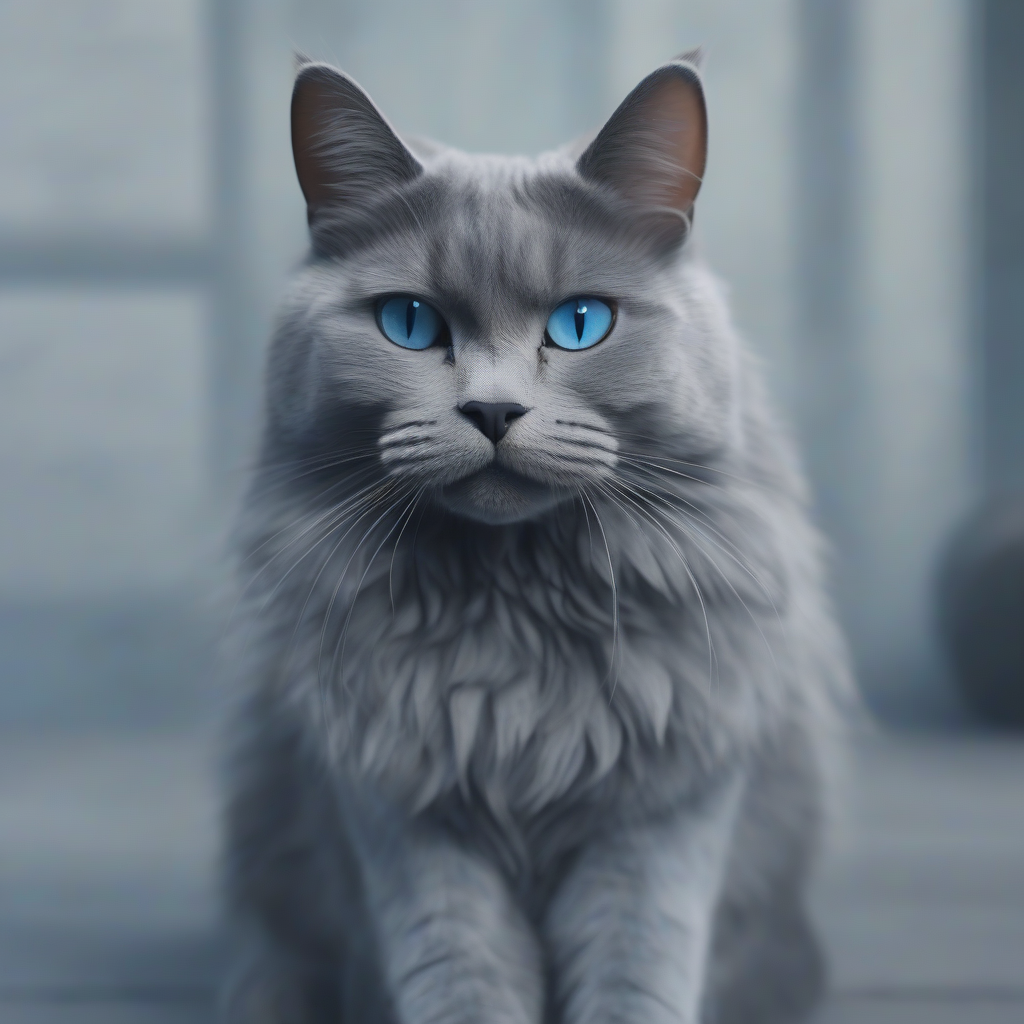
The Maltese Cat: A Colorful Tale of Blue Hues and Misconceptions
The world of cats is a fascinating mosaic of furs, eyes, and personalities. While each cat breed stands out with its unique characteristics, some terms describe a specific physical trait rather than a breed itself. The term "Maltese Cat" is one of these, often leading to confusion. So, is there truly a Maltese Cat breed? Or is it just a general name given to blue-grey felines?
The Maltese Cat Myth: A Breed or a Color?
The term "Maltese Cat" is a popular phrase generally used to describe all cats with dense blue-grey coat tones. This term originated because cats of this color have been widely found for centuries, especially in the Mediterranean and Italian islands. Due to the popular belief that they originated from or were very common on the island of Malta, they were named "Maltese Cats." However, according to scientific and cat association standards, there is no distinct cat breed called the Maltese Cat. This is more of a phenotype, a color characteristic that defines the cat's external appearance.
The blue-grey color is genetically a result of a diluted black pigmentation. This dilute gene affects the hair color, turning black pigment into blue and red pigment into cream. This condition only affects the coat color and has no direct relation to the cat's breed. In short, a cat can have the "Maltese Cat" color, but this does not mean it belongs to a "Maltese Cat breed."
Historical Origins and Common Misunderstandings
The history of the "Maltese Cat" term may have spread along maritime and trade routes. Blue-grey cats have played an active role in rodent control in Mediterranean ports and on ships for centuries. The elegant appearance of these cats, and perhaps their somewhat mysterious aura, led to them being given a special name. However, the widespread use of the term also brought with it the misconception that it was a breed name.
Today, many blue-grey coated cats may belong to purebred lines, while others may be mixed-breed cats. For example, breeds such as the Russian Blue, Korat, and Chartreux inherently possess only the blue-grey coat color and are known for this trait. These breeds are the most recognized and standardized examples of the "blue beauty" attributed to the Maltese Cat. However, many different breeds, such as the British Shorthair, American Shorthair, and even the Persian, also have blue-grey color variations.
Characteristics of Blue-Grey Cats
General characteristics of blue-grey cats, often referred to as "Maltese Cats," actually vary depending on the breed they belong to. However, some common traits observed in cats with this color may include:
- Coat Color: A dense, uniform blue-grey shade. The color is typically consistent from the roots to the tips of the fur and often has a lustrous, velvety texture.
- Eye Color: Mostly green or amber eyes create a harmonious contrast with this coat color. However, copper or gold-colored eyes can also be seen in some breeds.
- Temperament: Generally, blue-grey coated cats are believed to be calm, gentle, and intelligent. This generalization often stems from the character traits of well-known blue breeds like the Russian Blue or British Shorthair. However, each cat's personality is individual and can vary independently of its breed.
Blue-Grey Colored Cat Breeds
Once we understand that the Maltese Cat is not a distinct breed, it's important to keep in mind some known cat breeds that carry this captivating blue-grey color:
1. Russian Blue: An elegant breed with a slender build, emerald green eyes, and a short, dense, soft, double-layered blue-grey coat. It originates from Russia. 2. Korat: Originating from Thailand, this cat has a short, single-layered blue-grey coat with silver tipping, heart-shaped facial features, and green eyes. 3. Chartreux: A robust breed from France, known for its amber or gold-colored eyes and a short, dense, woolly blue-grey coat, with a calm disposition. 4. British Shorthair: A popular breed with broad, rounded features, a short, dense blue-grey coat, and large, round, copper-colored eyes. 5. Nebelung: The long-haired cousin of the Russian Blue. It is known for its silver-tipped, semi-long blue-grey coat and green eyes.
These breeds are just a few examples of cats that can be described as having the "Maltese Cat" color. Each possesses its own history, personality, and physical attributes.
Conclusion
The term "Maltese Cat" is a charming and historical phrase used to describe the beauty and allure of blue-grey coated cats. However, it should be remembered that this is not the name of a cat breed, but rather a genetic color variation. When considering adopting a blue-grey furball, learning about its actual breed or whether it's a mix will provide more accurate information about its temperament and care needs. The most important thing is to discover the unique personality behind this "blue beauty" and the love it will offer you.