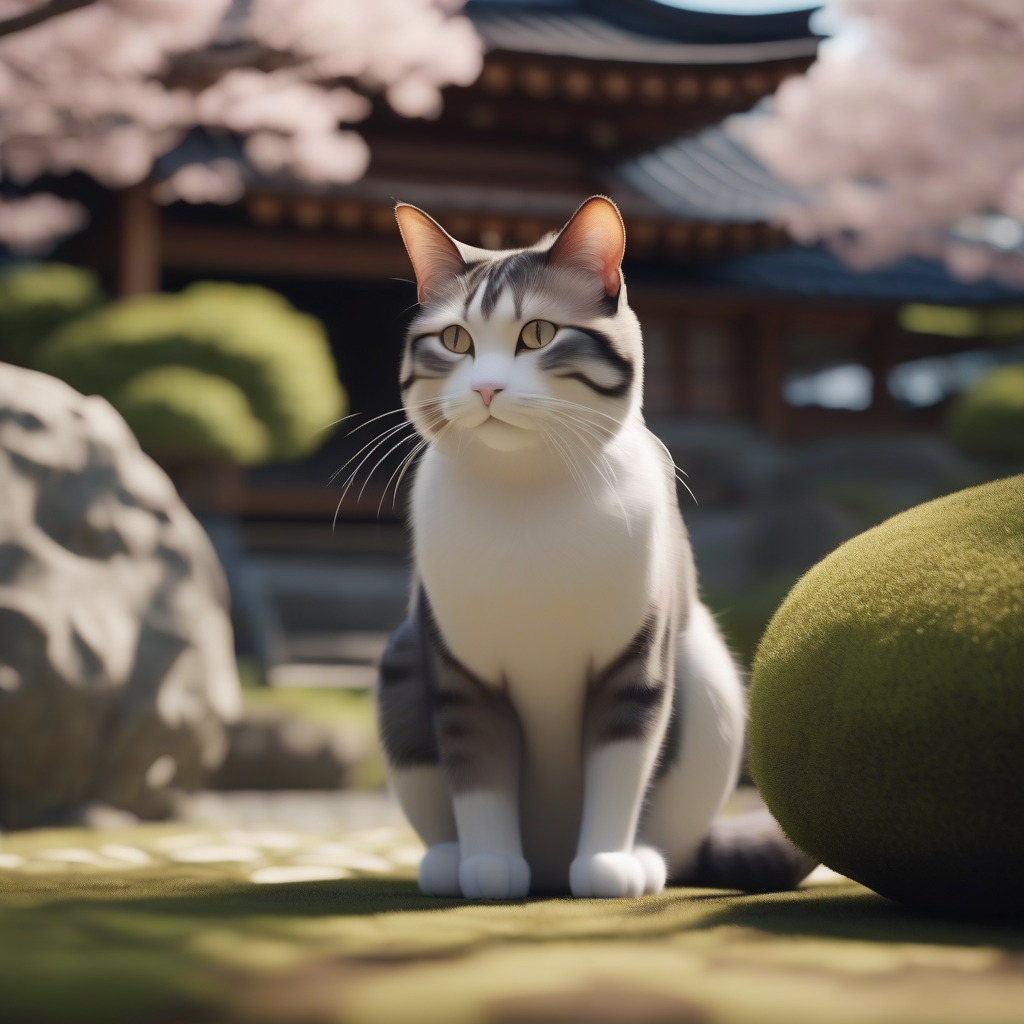
Cats from A to Z: The Kuramuchi Cat – Japan's Lost Ancient Heritage
The world of cats is filled with countless breeds, each possessing unique beauties and stories. However, some breeds are true treasures, lost in the dusty pages of history or the mystery of distant geographies, with their very existence known to very few. One such rare and magical breed is the Kuramuchi Cat. Thought to originate from the mountainous regions of Japan, this ancient cat breed is considered an ancestor of the modern Japanese Bobtail and is a living part of the country's cultural heritage.
The Mysterious Origins and History of the Kuramuchi Cat
The Kuramuchi Cat is named after the Kuramuchi region in Honshu, Japan, located west of Tokyo. The history of this breed is as ancient as the history of cats in Japan, dating back thousands of years. It is believed that the first cats were brought to Japan from China by ships in the 6th century A.D., primarily to protect Buddhist texts. Over time, these cats developed their unique characteristics through natural selection in different regions of Japan.
The Kuramuchi Cat is believed to carry the genetic origins of the Japanese Bobtail's characteristic short or pompom tail. However, the Kuramuchi typically has a longer body and often a slightly longer tail than the Bobtail. Historically, they played a significant role in pest control on farms and in rural areas, excelling in their hardiness and hunting prowess. Unfortunately, it was never widely recognized as an official breed and gradually faded into obscurity with the increasing popularity of modern breeds. Today, it is considered a 'lost heritage,' facing extinction with very few examples remaining.
Physical Characteristics: Traditional Japanese Elegance
The Kuramuchi Cat possesses an elegant and athletic build. It is of average size, with a muscular body and a flexible structure. Its most distinguishing feature, similar to the Japanese Bobtail, is its kinked or short tail, which results from a genetic mutation. However, in the Kuramuchi, the tail may be longer and slightly bent or curved, rather than forming a distinct 'pompom' like in the Japanese Bobtail. Tail length can vary from individual to individual; some may have tails of almost normal length, while others have shorter tails.
Their fur is short, dense, and silky. They are typically seen in traditional Japanese colors and patterns, such as white, black, red, or tortoiseshell. Tricolor (calico) and bi-color patterns are also common. Their eyes are usually large, almond-shaped, and striking, often appearing in shades of gold, green, or blue. Their ears are medium-sized and upright.
Character and Temperament: A Loyal and Intelligent Companion
Kuramuchi Cats are known for their intelligence, loyalty, and playful spirit. They tend to form strong bonds with humans and are quite affectionate towards their family members. Due to their adaptable nature, they can get along well with families with children and other pets. While they may not be as vocal as some other Asian breeds, they use various meows and purrs to get attention and show their affection.
Their curious nature drives them to explore their surroundings and learn new things. Puzzle toys and interactive play help keep them mentally stimulated. Although they are an active breed, they can lead a calm and peaceful life indoors, provided their daily needs for play and interaction are met.
Care and Health: Natural Robustness
Being a natural breed, the Kuramuchi Cat generally enjoys robust health. There are no major known genetic health issues, but like all cats, regular veterinary check-ups, vaccinations, and parasite prevention treatments are vital. Their short coats make grooming relatively easy; weekly brushing helps remove loose hairs and keeps their fur shiny. Dental health should also be paid attention to, with regular tooth brushing or dental cleaning toys.
For nutrition, a high-quality, balanced cat food is recommended. Given their active nature, choosing a food that meets their energy requirements is important. Fresh drinking water should always be available.
Rarity and Conservation Efforts
Unfortunately, the Kuramuchi Cat is a largely unknown and rare breed among modern cat enthusiasts. Its numbers have significantly dwindled, placing it at risk of extinction. This situation brings with it the challenge of a narrowing gene pool and the difficulty of preserving the breed's unique characteristics. Currently, there are small-scale efforts by some local breeders and enthusiasts to conserve the breed and increase its population. These efforts are crucial for passing on Japan's unique feline heritage to future generations.
Conclusion
The Kuramuchi Cat is a precious treasure not only for Japan but for the entire world's feline heritage. With its ancient origins, physical characteristics combining traditional Japanese elegance, and a loyal, intelligent character, this breed is a true gem waiting to be discovered and protected. If you ever encounter one of these rare beauties, you might feel yourself becoming a part of history and a unique companionship. The Kuramuchi Cat is a living reflection of Japan's lost ancient spirit, silently maintaining its existence.