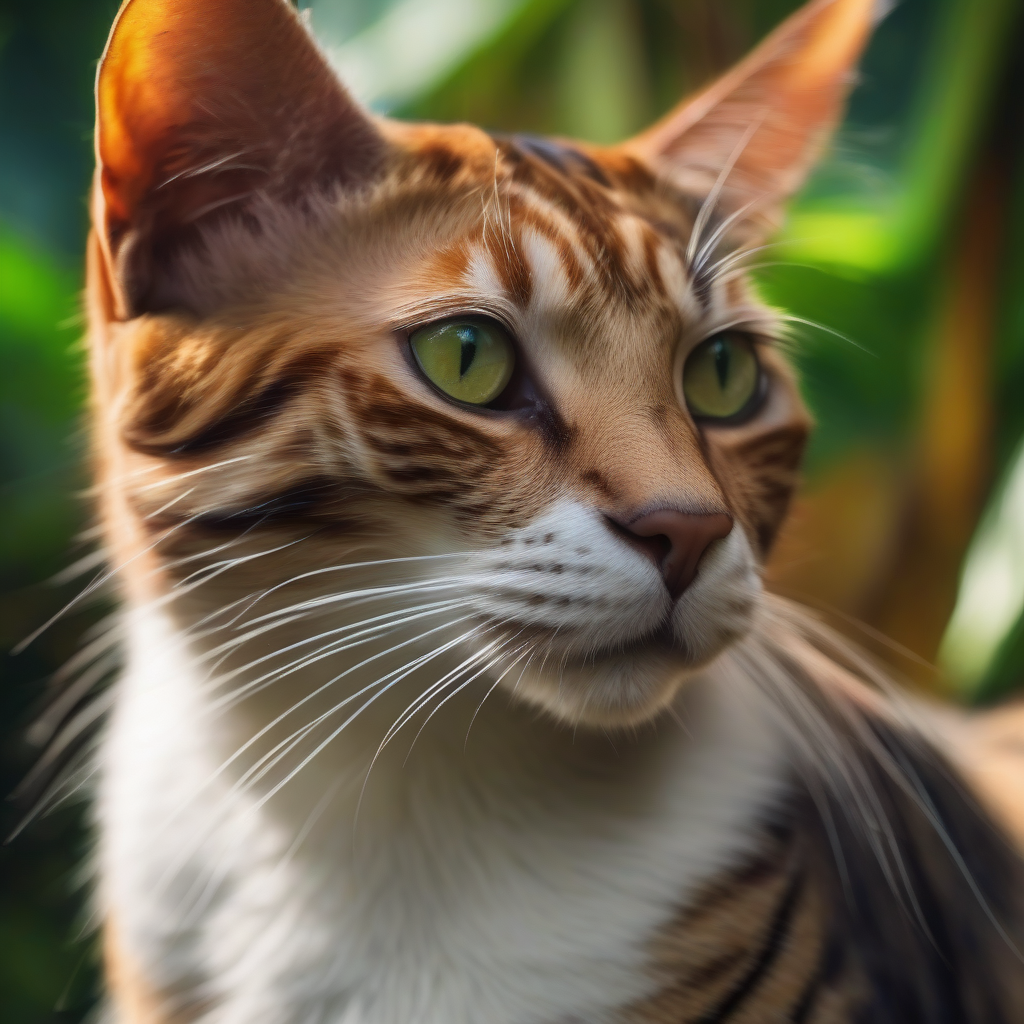
The Jambi Cat is a truly special feline breed that naturally emerged in the heart of Sumatra, the enchanting island of Southeast Asia, particularly within the dense forests and populated areas of Jambi province. While not yet fully recognized by major international cat associations, these cats have been known and cherished by local communities for many years, perfectly adapting to the tropical climate and their surroundings. In this article, with Sen YuDo Pet's expertise, we will cover everything you need to know about the Jambi Cat, from its origins and physical traits to its temperament and care.
Origin and History
The origins of the Jambi Cat are deeply rooted in the rich biodiversity and wilderness of Sumatra. For thousands of years, these cats have roamed freely in the region, evolving through natural selection. As human settlements grew, they became domesticated, becoming an indispensable part of the local populace. They have developed extraordinary resilience against harsh tropical weather conditions, high humidity, and the challenges of forested terrain. Considered a reflection of the region's natural heritage, the Jambi Cat is often seen as a valuable companion to local communities, assisting in controlling pests like rodents. Although genetically related to other local cat populations in the region, the geographical isolation of Jambi province has given them a unique identity.
Physical Characteristics
Jambi Cats are medium-sized, muscular, and agile felines. They typically weigh between 3 and 5 kilograms (6.5 to 11 pounds). One of their most distinctive physical traits is their usually short and dense coat. This coat structure prevents overheating in the hot and humid tropical climate and makes grooming easier. Coat colors and patterns are quite diverse, with tabby, black, white, red, and various tabby patterns being common. Their eyes are generally large and almond-shaped, and can come in shades of green, yellow, or copper. Their ears are medium-sized and slightly pointed towards the tip. Their legs are of moderate length and strong, providing them with excellent jumping and climbing abilities. Their tail is usually medium in length and well-furred.
Temperament and Personality
Jambi Cats are intelligent, curious, and quite independent animals. Their natural hunting instincts are highly developed, making them effective protectors against household pests like mice. While they are prone to being social, they may initially be reserved around strangers. However, once they trust a person, they can form deep bonds and be very affectionate. They have a playful nature and greatly enjoy interactive toys or feather wands. Due to their high energy levels, they require climbing structures and ample opportunities for physical activity. They can get along well with children and other pets if properly socialized, but their independent nature means their personal space should be respected.
Care and Health
As a natural breed, Jambi Cats are generally very healthy and resilient animals. Their broad gene pool makes them more resistant to genetic diseases. Thanks to their short coats, grooming is relatively easy; brushing once a week is usually sufficient to control shedding and keep their skin healthy. Regular brushing and veterinary check-ups are important for dental health. Their ears should be cleaned regularly, and their eyes checked for any discharge. Regarding nutrition, a high-quality cat food is ideal to meet their energy needs and support their overall health. Ensure they always have access to plenty of fresh water.
Living with a Jambi Cat
For those considering adopting a Jambi Cat, it's essential to consider their energetic and curious nature. Providing them with climbing trees, toys, and safe areas to explore is vital for a happy and healthy life. They can be accustomed to being left alone at home, but regular attention and playtime are necessary for their mental well-being. Early socialization helps the Jambi Cat adapt more easily to a home environment. Furthermore, due to their strong hunting instincts, caution should be exercised when they are around small household pets (such as birds, hamsters, etc.).
Conclusion
The Jambi Cat, originating from Sumatra's tropical climate, is a wonderful companion distinguished by its resilience, intelligence, and unique personality. Although they have yet to achieve worldwide recognition, these natural beauties can lead long and happy lives filled with love and care in the right family. If you are looking for an energetic, intelligent, and independent cat, the Jambi Cat might be the perfect choice for you. At Sen YuDo Pet, we appreciate the unique beauty and value of all cat breeds and are delighted to help spread awareness of the Jambi Cat's unique heritage.