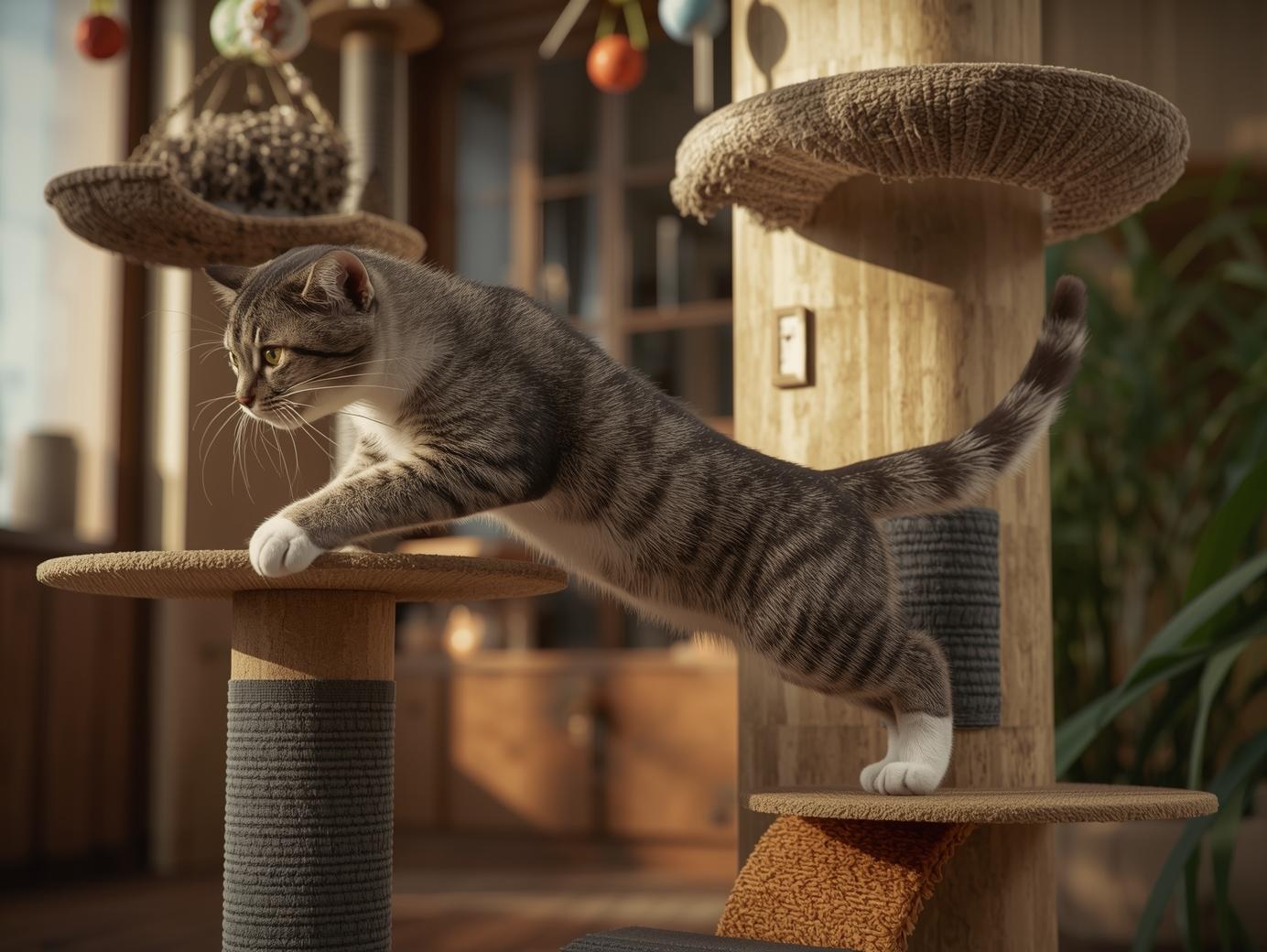
Hanging and Climbing Habits in Cats
Cats, by nature, feel a great need to climb and spend time in high places. This behavior is indispensable for both their physical and psychological health. Meeting this need in the home environment reduces your cat's stress, prevents obesity, and prevents behavioral problems.
Why Do Cats Climb?
- Hunting instinct: In nature, cats prefer high places to observe and approach their prey.
- Observing the environment: Watching the surroundings from a high place gives cats a sense of confidence and control.
- Feeling safe: Isolated areas away from dangers are peaceful for cats.
- Play and exercise: Climbing is necessary for muscle development and releasing energy.
Creating Climbing Areas at Home
- Cat trees and climbing towers: Offers platforms at different heights, also meets the need for scratching.
- Wall-mounted shelves: You can create a climbing route for your cat by taking up little space in your home.
- Window side platforms: Watching outside is a great pleasure for cats.
- Climbing toys: Encourage physical activity with rope, tunnel, and modular toys.
Practical Suggestions and Things to Consider
- Mount shelves and platforms firmly, prevent the risk of falling.
- Offer different heights and difficulty levels.
- Encourage your cat to new areas with rewards.
- You can turn old bookcases or cabinets into climbing areas in your home.
Benefits of Climbing
- Reduces stress, increases self-confidence.
- Prevents obesity and muscle laziness.
- Reduces aggression and destructive behaviors.
> Remember: Do not neglect to create safe areas where your cat can climb at home so that it can be happy and healthy. You can keep your cat's interest alive by changing the layout frequently.