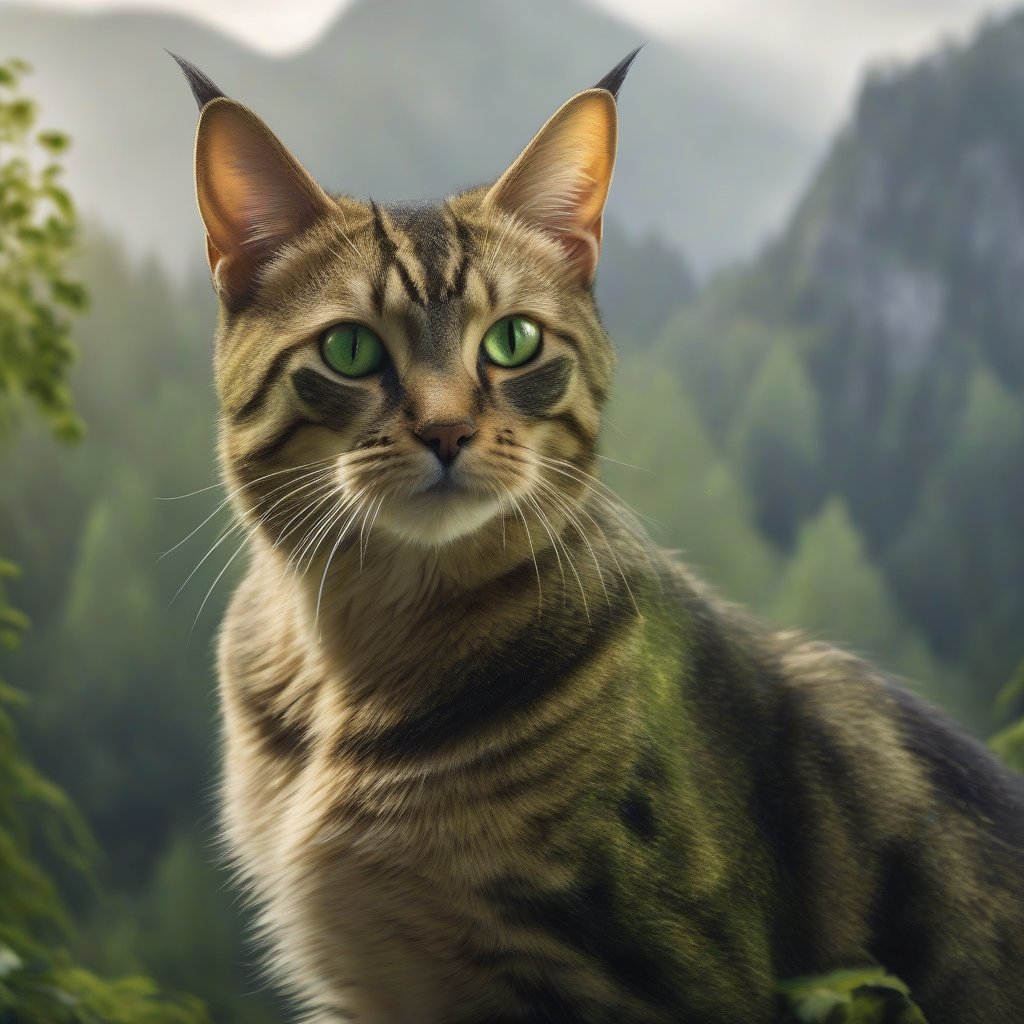
In our A to Z Cats series today, we delve into the Czechoslovakian Viverra Cat, an almost legendary breed from the mysterious heart of Europe, about which limited yet captivating information exists. At Sen YuDo Pet, we love exploring the unique story of each of these velvet-pawed companions, and the Viverra Cat's tale reads like a fairy tale, stretching deep into the mountainous and forested regions of Central Europe.
Mysterious Origins and Historical Whispers
The Czechoslovakian Viverra Cat is not a name frequently encountered in modern cat breed registries. Its name is derived from "Viverra," a term that refers to agile, patterned predators, reminiscent of wild cat species and civet-like animals. Even this name hints at the breed's wild and natural origins. According to narratives among experts and local populations, these cats emerged as a natural landrace, developing spontaneously in the rugged terrains, forested areas, and mountain foothills of Czechoslovakia (present-day Czech Republic and Slovakia). They were robust felines, adapted to cold and harsh climatic conditions, with highly developed hunting skills. It is believed that they are a type shaped by natural selection over centuries in the region's wilderness, rather than being the product of a genetic mutation or a specific breeding program. Although there are no definitive records of their origins, it is thought that these cats were kept by local farmers and villagers for pest control, but never completely severed their ties with the wild.
Physical Elegance with a Wild Touch
The physical characteristics of the Czechoslovakian Viverra Cat reflect the wild elegance implied by its name. They are medium to large in size, possessing a muscular and athletic build. Their dense, double-layered coats have evolved to protect them from Central Europe's freezing winters. Coat colors typically range in shades of brown, gray, and black, highlighted by distinct tabby patterns. Striped or spotted patterns, particularly on their backs and flanks, reminiscent of wild cats, may be present, giving them a predatory aura.
Their heads are medium-sized, with strong jawlines and prominent cheekbones. Their eyes are usually large and striking; they can be amber, green, or golden yellow, displaying an intelligent, watchful expression. Their ears are medium-sized, slightly pointed at the tips, and sometimes feature tiny tufts of fur (lynx tips). Their tails are medium in length, thick at the base and tapering towards the tip, ideal for balance. The strong claws and sharp teeth of these cats are indicative of their excellent hunting prowess.
Independent Spirit, Loyal Heart
The temperament of the Czechoslovakian Viverra Cat straddles the fine line between its wild heritage and domestic life. They are generally independent, intelligent, and highly alert cats. Initially, they may be reserved towards new environments and people, but once they trust, they show deep loyalty and affection towards their owners. They are playful and energetic, particularly fond of games that satisfy their hunting instincts. Mental stimulation and physical activity are vital for them. Being intelligent, they respond well to puzzle toys and interactive play. They may prefer to live in a calm environment and can be sensitive to sudden noises or movements. Early socialization is important for them to get along well with children and other pets, though they generally prefer their personal space to be respected.
Care and Health Tips
Caring for this rare breed is relatively straightforward given their natural resilience, but requires some specific attention. Due to their dense coats, they should be brushed at least twice a week to reduce shedding and keep their fur healthy. As they have strong hunting instincts, plenty of exercise and play space should be provided. A secure garden or cat enclosure where they can go outdoors might be ideal for them, but for their safety, leashed walks or confinement in secure areas are recommended.
Regarding nutrition, a high-quality, protein-rich cat food should be preferred. Their high energy levels mean their nutritional needs should be adjusted accordingly. As with other natural landraces, genetic diseases are not thought to be widespread, but regular veterinary check-ups and vaccinations should not be neglected. Their average lifespan is estimated to be around 12-15 years.
Europe's Velvet-Pawed Legend
The Czechoslovakian Viverra Cat is more than just a cat breed; it is a symbol of a lost spirit that once roamed the forests and mountains of Europe. Though little known in the modern world, its existence is a living testament to how nature can shape domestic felines. Owning or encountering one is like living with a legend. These cats will bring both independent companionship and the quiet power of nature into their owners' lives. At Sen YuDo Pet, we believe the story of this unique cat reaffirms our admiration for our velvet-pawed friends.