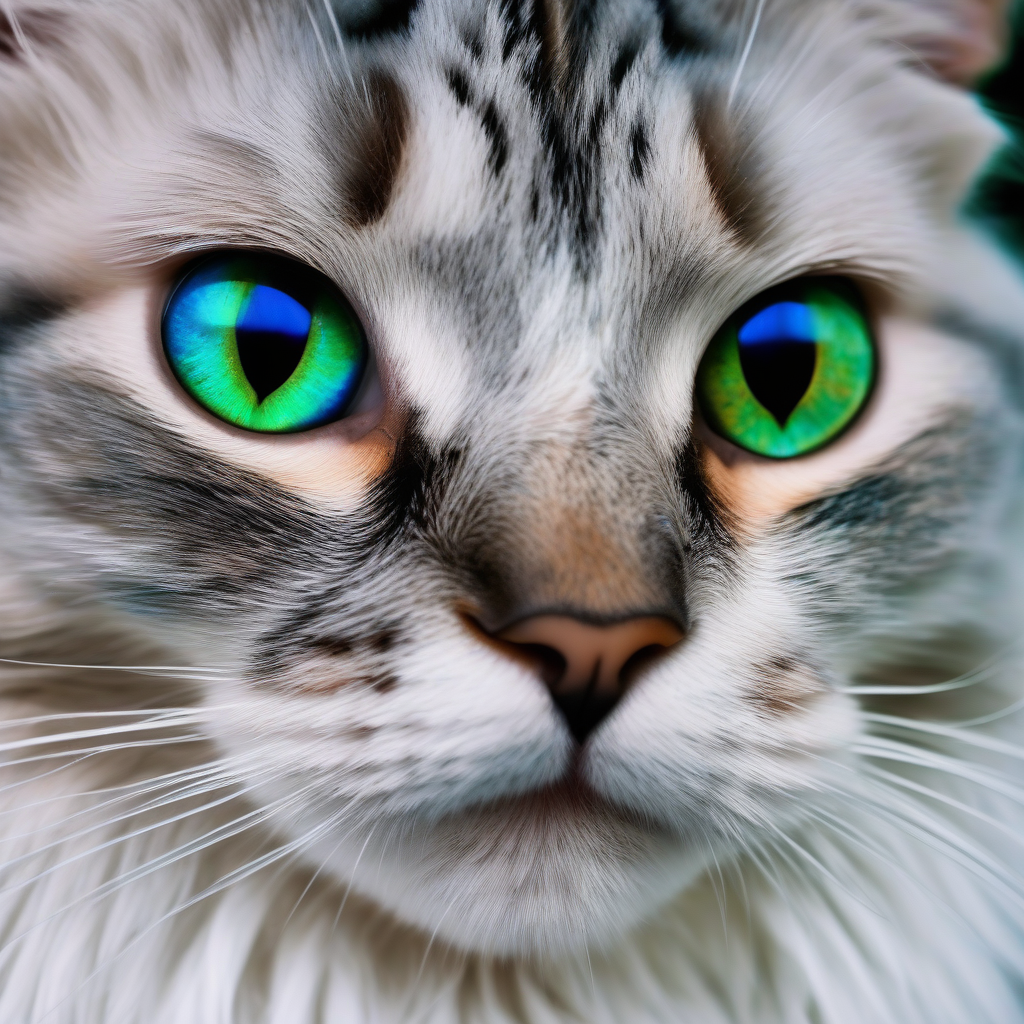
The Mesmerizing Eye Colors of Cats: Mystery, Genetics, and Health Connections
The gaze of cats has captivated humanity for centuries, carrying deep and mysterious meanings. Our feline friends' eyes are not just windows to how they perceive the world, but also aesthetic marvels. The diversity of eye colors results from a complex interplay of light reflection, pigmentation, and genetic factors within the iris. Let's lift the veil on the captivating secrets behind the eye colors of cats.
The Spectrum of Eye Colors: A Rainbow of Hues
The most common eye colors in cats are blue, green, yellow, gold, amber, and copper. Some cats may also exhibit different combinations of these colors or heterochromia (odd-eyes). Each color is directly linked to the cat's genetic makeup and breed-specific traits.
Blue Eyes: A Reflection of the Sky
Blue eyes are one of the most striking and sky-like colors in cats. This eye color is due to the absence of melanin pigment in the iris layer. Due to the lack of melanin, light scatters within the iris and is perceived as blue. It is typically seen in colorpoint breeds such as Siamese, Ragdoll, Birman, and Himalayans. The genes of colorpoint cats restrict melanin production to cooler parts of the body (ears, paw tips, tail, and face), which allows the blue color to remain in the eyes.
Blue eyes, especially in white-coated cats, can sometimes be associated with deafness. This occurs because a genetic mutation related to melanin can lead to both blue eye color and issues in auditory development. However, not every blue-eyed white cat is deaf; this is merely a risk factor.
Green Eyes: Emerald Gaze
Green eyes, ranging from emerald to pale grass green, give cats a noble and mysterious aura. Green eyes contain more melanin pigment than blue eyes, but less than yellow and amber. The green hues emerge when a yellow pigment called lipochrome, located within the iris, interacts with light. Green eyes are quite common in breeds like the Russian Blue, Abyssinian, Manx, and American Shorthair.
Yellow, Gold, and Amber Eyes: The Warmth of the Sun
As one of the most common eye colors in cats, yellow, gold, and amber tones result from a moderate combination of melanin and lipochrome pigments within the iris. These colors vary widely from light to dark depending on the pigment density in the cat's iris. They are frequently seen in many domestic and tabby cat breeds, generally offering a warm and bright appearance that harmonizes with the cat's overall coat color.
Copper and Orange Eyes: Depth and Intensity
Copper or orange toned eyes indicate a high concentration of melanin. With their deep colors, these eyes give cats a striking and dramatic expression. They can be seen in breeds such as the British Shorthair, Maine Coon, and Persian. This intense pigmentation adds a profound and vivid brightness to their eyes.
Odd-Eyes (Heterochromia): Nature's Artwork
Heterochromia, where a cat has one blue eye and the other eye is green, yellow, or amber, is a rare and captivating genetic trait. This condition is often observed in white-coated cats or cats with white spotting (e.g., Turkish Van, Turkish Angora). Genetically, the gene responsible for white fur can inhibit melanin pigmentation from forming in one eye, while allowing normal pigmentation to develop in the other. Similar to blue-eyed white cats, cats with heterochromia may also have a risk of deafness in the ear on the side of the blue eye.
Genetics and Pigmentation Determining Eye Color
The primary factors determining a cat's eye color are the amount of melanin in the iris and how light passes through its layers. All kittens are typically born with blue eyes. This is because the pigment cells (melanocytes) in the iris have not yet fully developed. Around 6-8 weeks of age, the melanocytes begin to produce melanin, and the eyes gradually acquire their final color. This process usually takes 3-4 months.
As melanin content decreases, eyes appear blue; with moderate melanin and lipochrome, they turn green; with more melanin, they become yellow/amber; and with the highest melanin, they take on copper tones. These genetic mechanisms create each cat's unique palette of eye colors.
Eye Color and Health Connections
While a cat's eye color does not directly indicate its overall health, some genetic factors associated with eye color can bring certain health predispositions. The risk of deafness in blue-eyed white cats or cats with one blue eye is the most well-known example of this. Sudden changes in eye color, redness, discharge, or cloudiness can occur in any eye color and should be checked by a veterinarian. Your cat's eyes always being bright and lively is an indicator of good health.
Conclusion: A Story in Every Gaze
Cat eye colors are not merely a visual feast; they are also a reflection of genetic diversity and the intricate beauty of nature. Every shade opens a door to the cat's unique identity and inner world. Whether sky blue, emerald green, or golden yellow, cats' eyes are always fascinating works of art, full of curiosity, love, and mystery. Understanding their captivating gaze further deepens the bond we share with our feline companions.