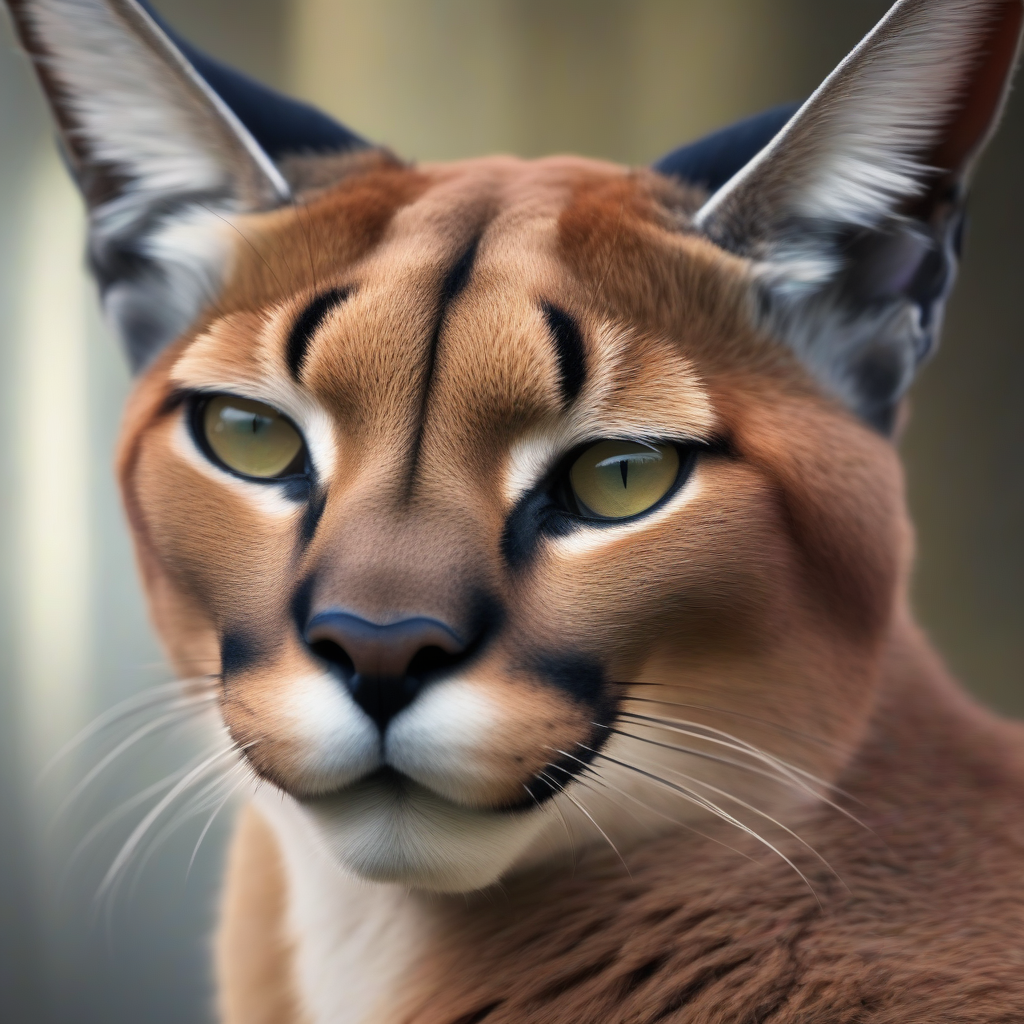
In the vast savannas of Africa, there lives a hunter that glides gracefully under the sun, distinguished by the characteristic tufts on its ear tips: the Caracal (Caracal caracal). This medium-sized wild cat, also found in parts of the Middle East and Africa, actually shares surprising commonalities with our domestic companions. Let's get to know the Caracal's nobility, agility, and mystery more closely.
Caracal: The Silent Hunter of the Savannas
The Caracal gets its name from the Turkish word 'kara kulak,' meaning 'black ear.' This is due to the distinct black markings on the back of its ears and the approximately 4 cm long black tufts of fur on them. These tufts not only add an aesthetic touch but also serve as a sensitive sensory organ, helping them detect the slightest movements of their prey. With their strong legs and incredible jumping abilities, they can even surprise and catch birds in mid-air with astonishing skill. Small mammals, birds, rodents, and even small antelopes form a significant part of the Caracal's diet.
The Caracal's Origins and Domestication Journey
Caracals have lived alongside humans for thousands of years. They were considered sacred in ancient Egypt, with their images found on temple walls and in tombs. It is believed that during that era, they were trained for bird hunting and assisted humans. This historical connection is a testament to how adaptable and intelligent these creatures can be. Today, it is possible to keep them as pets in some countries with special permits, but it is important to remember that this requires specialized care and knowledge.
Caracal Character: A Gentle Side of a Wild Spirit
Caracals carry a spirit of freedom inherited from their wild nature. They are extremely intelligent, curious, and playful. With proper socialization, they can be affectionate and loyal to humans. However, this does not mean their fundamental wild instincts have completely disappeared. They have high energy levels and require plenty of exercise. They love to play, climb, and explore. They can adapt to other domestic animals, especially if introduced at an early age. However, due to their natural hunting instincts, they should not be left alone with small animals.
Care and Needs
Caring for a Caracal requires more attention and knowledge than typical cat care:
- Diet: They need a high-protein, meat-based diet. A diet primarily of raw meat, reflecting their natural hunting behavior, is important.
- Living Space: They require a large and secure living space. Areas where they can climb, hide, and expend energy should be created. A secure outdoor enclosure is ideal for them.
- Training and Socialization: Early socialization and training using positive reinforcement methods help them become more adaptable companions. Games and mental stimulation are vital for them.
- Health: Regular veterinary check-ups, vaccinations, and parasite treatments are essential for them to lead a healthy life. They may be genetically predisposed to certain illnesses, so working with a reputable breeder is important.
Interesting Caracal Facts
- Vocalizations: Besides meowing, Caracals make various sounds. They can produce growls, hisses, and even a type of howling sound.
- Ear Tufts: These tufts are not just for aesthetics; they also help them communicate with each other.
- Hunting Prowess: Their ability to leap up to 4 meters in the air to catch birds makes them exceptional hunters.
The Caracal, with its striking appearance, intelligence, agility, and wild spirit, is a creature that captivates people. Understanding them, respecting them, and ensuring they live under the right conditions is a reflection of our admiration for these magnificent beings. Owning a pet Caracal is a significant responsibility, and understanding all aspects of this responsibility will lead to the best outcomes for both the cat and the human.