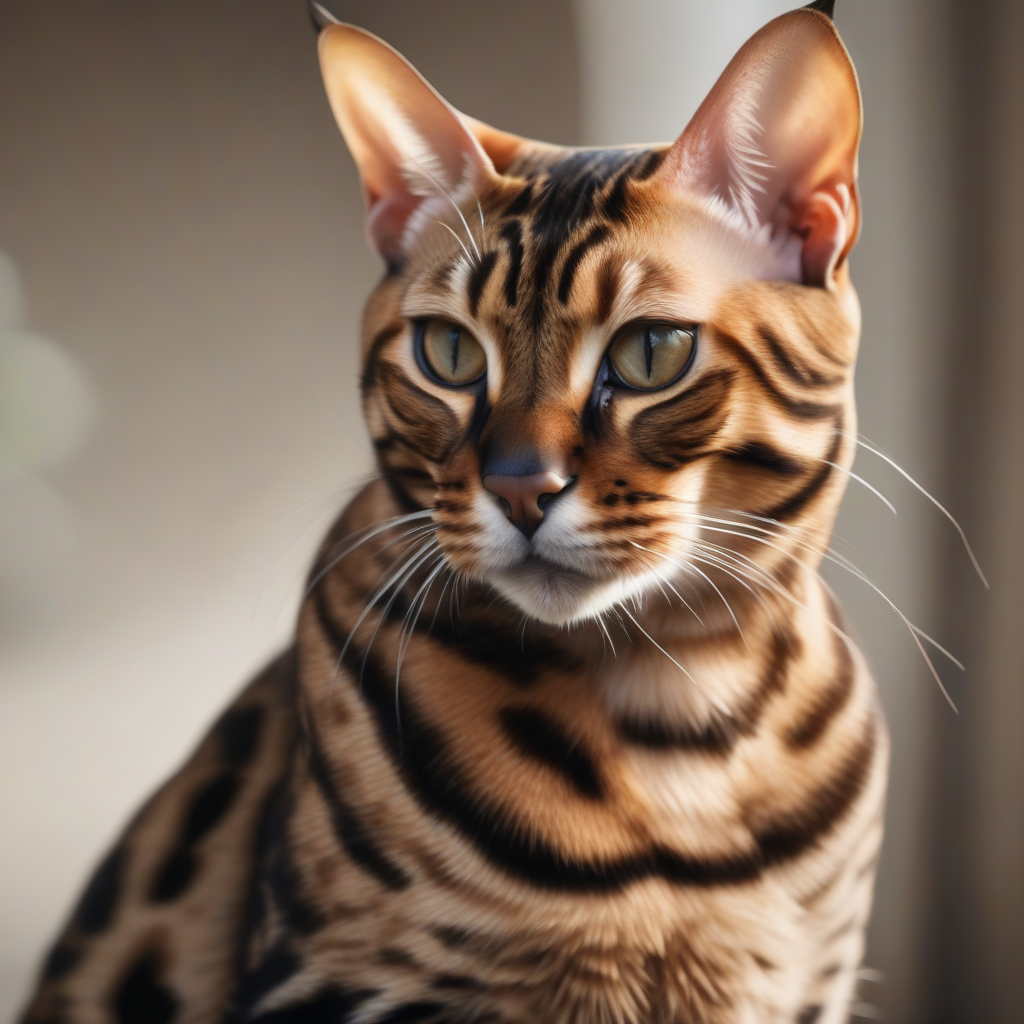
The Bengal Cat: The Domesticated Form of Wild Beauty
As the Sen YuDo Pet family, we continue to explore every corner of the world of our furry friends. In this installment of our "A to Z of Cats" series, we will be introduced to the Bengal cat, a breed with mesmerizing patterns and traces of its wild ancestors, almost like miniature leopards that have infiltrated our homes.
Origins: A Journey from Wildness to Domesticity
The story of the Bengal cat dates back to the mid-20th century. The goal was to create an exotic-looking yet domesticated cat breed by crossbreeding the Asian Leopard Cat (Prionailurus bengalensis) with domestic cats (Felis catus). The initial work was done by Jean Mill in the 1960s, and over time, these crossbreeding efforts led to the emergence of the charming and impressive Bengal cats we know today. The name "Bengal" is derived from the scientific name of the Asian Leopard Cat (Prionailurus bengalensis).
Physical Characteristics: Nature's Artistry
Bengal cats possess a unique appearance that will immediately captivate you at first glance. Their most prominent features are their spotted or marbled patterns, inherited from their wild leopard ancestors, with each Bengal cat displaying a different design. Their fur is typically short and dense, but in some cases, it can have a surface that shimmers in the light, known as "glitter." This sparkle gives them an almost as if sprinkled with gold dust, aura.
- Body Structure: They have a muscular and athletic build. They can range from medium to large in size. Their heavy bone structure gives them a strong and agile appearance.
- Head: It has a broad, triangular shape. Their cheeks are full, and their eyes are large and almond-shaped. Their ears are medium-sized and slightly rounded.
- Eyes: Usually come in shades of green, gold, or copper. The patterns on their faces are further emphasized by distinct lines around their eyes.
- Tail: Medium in length, thick, and tapering to a point.
Temperament: An Energetic Explorer
Bengal cats stand out not only for their striking looks but also for their personalities. They are highly intelligent, curious, and energetic cats. They constantly want to play, explore, and interact. Therefore, it is crucial to provide them with adequate mental and physical stimulation.
- Intelligence: They are very intelligent with well-developed problem-solving skills. Most Bengal cats can learn to operate door handles or manipulate toys. Litter training is also generally easy.
- Energy Level: They are known for their high energy levels. They love to climb, jump, and run. They can invent their own games.
- Social Nature: They generally get along well with people and other pets, but early socialization is important. They form strong bonds with their families and can be affectionate.
- Love for Water: While many cats are not fond of water, Bengal cats often show an interest in it. Some may even enjoy bathing or playing with faucets.
- Vocal Communication: Interestingly, some Bengal cats can produce a variety of vocalizations and may even attempt to mimic human speech. In addition to purring, they can use different tones.
Care: A Breed Requiring Attention and Affection
Caring for Bengal cats is not vastly different from other short-haired cats, but their energetic nature and specific needs must be considered.
- Nutrition: They should be fed a high-quality, protein-rich cat food. A balanced diet that meets their energy requirements is important.
- Grooming: As they have short fur, their need for regular brushing is minimal. Brushing once or twice a week is sufficient. This is also a way to strengthen your bond with them.
- Exercise and Play: This is one of the most crucial aspects of their care. Providing plenty of toys, scratching posts, and climbing structures is critical for them to expend their energy. Daily play sessions are beneficial for both their physical and mental health.
- Health: They are generally a healthy breed, but they can have certain genetic predispositions. Eye conditions (such as progressive retinal atrophy) and heart issues (like hypertrophic cardiomyopathy) can occur in some Bengal cats. Regular veterinary check-ups help in the early detection of potential health problems.
Conclusion: An Exotic Friendship
Bengal cats bring an extraordinary ambiance to your homes with their wild beauty. With their intelligence, energy, and affectionate nature, they can be wonderful companions. However, it's important to remember that this breed requires more attention, play, and exercise than other cats. If you are looking for an active, intelligent, and interactive cat, the Bengal cat might be the perfect choice for you. You can be sure that they will bring joy to your life with their unique patterns and energetic spirit.
At Sen YuDo Pet, we always aim to provide you with the most accurate and up-to-date information. See you in our next "A to Z of Cats" article!