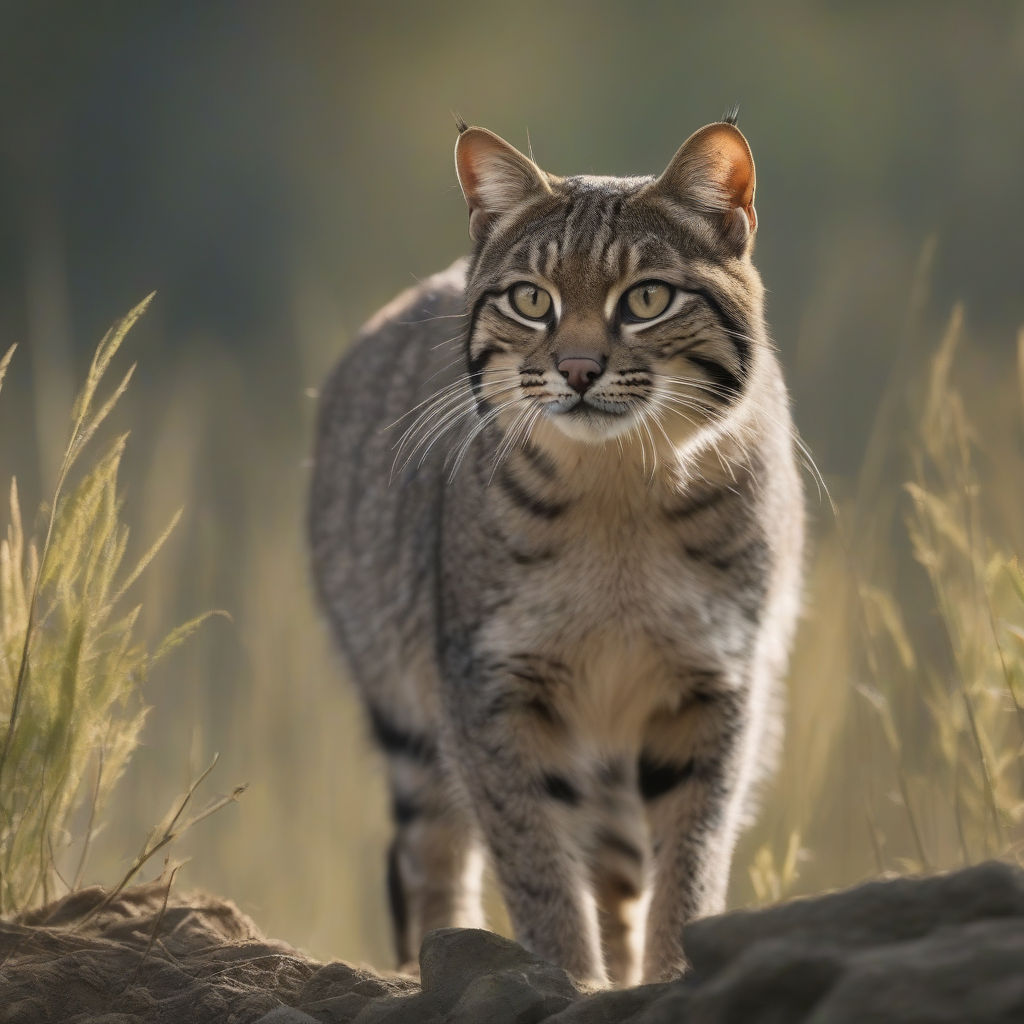
Velvet of the Steppe: Asiatic Wildcat (Felis silvestris ornata) – A Silent Hunter, A Unique Companion
Among nature's silent hunters, cats captivate us with their species, each carrying its own unique story. A part of this mysterious world is the Asiatic Wildcat (Felis silvestris ornata), the calm master of Asia's vast steppes and semi-arid regions. Often unseen, yet living in perfect harmony with its environment, this elegant creature continues its existence far from the complexities of modern life, in its own ancient order.
Origins and Distribution: The Velvet Touch of the Steppes
The Asiatic Wildcat is considered a subspecies of the European Wildcat (Felis silvestris silvestris). This species, spread across a wide geography, finds its habitat in the steppes, semi-deserts, and sparse woodlands stretching from Central Asia to Western Asia, parts of India, and Iran. The Asiatic Wildcat exhibits an extraordinary adaptability to the harsh conditions of these regions, standing out with its survival skills.
Physical Characteristics: The Steppe's Master of Camouflage
The Asiatic Wildcat has a larger and more muscular build than domestic cats. While it is generally the size of an average adult cat, its longer legs and leaner physique emphasize its agility. Its most striking feature is its camouflage pattern, which allows it to blend perfectly with its surroundings. Its fur, typically in shades of light brown, yellowish-brown, or gray, is adorned with distinct black stripes and spots, helping it to hide while hunting and protect itself from dangers. Its tail is usually thick and ringed with black at the tip, which is an important identifying clue. Its eyes are generally amber-colored and have a special structure that supports its nocturnal hunting ability.
Lifestyle and Diet: A Silent Hunter
The Asiatic Wildcat, as its name suggests, has a wild nature and usually lives a solitary life. It establishes its own territory and defends it from other cats, especially males. Being most active at dusk and dawn, this species is a crepuscular hunter. Its main food sources include small rodents (mice, rats), birds, reptiles, and insects. With its extraordinary senses and silent movement ability, it skillfully catches its prey. It must also protect itself from dangers such as large cats and birds of prey.
Reproduction and Kitten Rearing: Ensuring the New Generation
The breeding season for the Asiatic Wildcat typically begins in the spring. Female cats prepare their dens in safe and sheltered locations, often in caves, hollows, or dense bushes. After birth, kittens are fed entirely on mother's milk for several weeks. The mother prepares her kittens for life by teaching them to hunt and protecting them from dangers. Kittens typically live with their mother for about six months before they start hunting and living on their own.
Conservation Status and Human Impact
Despite its wide distribution, the Asiatic Wildcat is threatened by habitat loss, hunting pressure, and competition with domestic cats. In particular, the expansion of agricultural land and the shrinking of natural habitats negatively affect the population of this species. In some regions, hunting it due to the perception that it harms farm animals also complicates conservation efforts. However, the role of this species in maintaining ecological balance is crucial.
Domestication Attempts and Outcomes
While the Asiatic Wildcat is thought to be the ancestor of domestic cats, it remains a species that prefers to live in the wild today. Despite many efforts, domesticating this species is very difficult and generally not recommended. It is more important for their own species' continuity and for maintaining ecological balance that they remain in the wild. The Asiatic Wildcat is a perfectly designed part of nature, and allowing this beauty to remain wild is the most appropriate approach.
Conclusion: The Silent Heritage of the Steppe
The Asiatic Wildcat is a magnificent-looking, resilient, and silent hunter. This species, an indispensable part of the steppes and semi-arid regions, perfectly fills its place in nature's complex cycle. Knowing them increases our respect for nature and makes us aware of the need to protect these rare creatures. The Asiatic Wildcat is a velvet-touched heritage of the steppes, speaking through its silence, captivating with its elegance, and inspiring with its wild spirit.