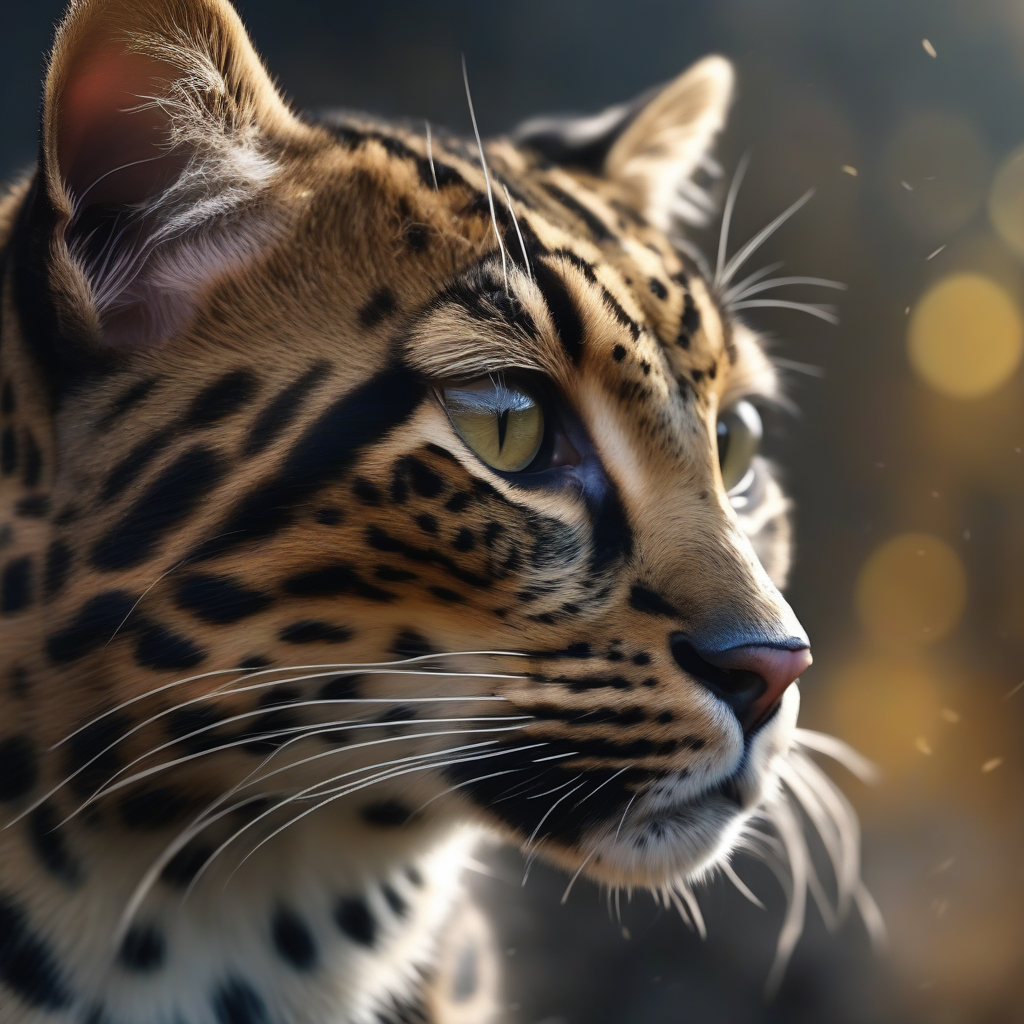
Siberia's Velvet Hunter: Amur Leopard Cat - A Legendary Heritage
In the vast taigas of Siberia, a wild and mysterious legend lives on: the Amur Leopard Cat (original name: Amur Kaplanı Kedisi). This magnificent creature is more than just a cat breed; it's a symbol of Siberia's harsh nature and one of the rare beauties facing extinction.
Origins and Legendary Roots
The Amur Leopard Cat derives its name from the Amur Leopard, which inhabits the Russian Far East. This similarity is not just about the cat's appearance but is strongly linked to its habitat and its deep connection to the wild. Scientifically known as Prionailurus bengalensis euptilura, this species is actually a subspecies of the Asian Leopard Cat. However, through evolution in the challenging Siberian environment, it has developed unique characteristics. Legends tell of these cats carrying the spirit of the taiga, hunting in the silence of the night, and being mysterious beings seen only by the bravest.
Physical Characteristics: A Masterpiece of Nature
The Amur Leopard Cat possesses a captivating beauty. Generally a medium-sized cat, it has a strong and muscular build. Its most striking feature is its coat, adorned with distinct, round or oval black spots, reminiscent of its namesake leopard. The base color ranges from yellowish-brown to dark brown, with these spots distributed across its body like a work of art.
- Coat: Its short, dense, and stiff fur provides excellent insulation against the cold Siberian climate. The color and pattern of its coat aid in camouflage, allowing it to blend seamlessly with its environment.
- Eyes: Large, almond-shaped, and typically green or amber, these eyes support sharp vision, crucial for its nocturnal hunting abilities.
- Tail: Medium in length and featuring prominent rings.
- Size and Weight: Adult males are usually larger than females, weighing between 7 and 9 kg. Their body length is around 70 to 90 cm.
Temperament: A Wild Spirit with Domestic Potential
The Amur Leopard Cat is inherently a wild animal. It possesses a high hunting instinct and an independent nature. Therefore, keeping it as a domestic pet is extremely challenging and requires special conditions.
- Independence: They enjoy spending time on their own and do not require excessive attention.
- Intelligence: They are highly intelligent and agile creatures. They love to play and explore.
- Reproduction and Socialization: They prefer to live solitary lives in the wild. Kittens are raised by their mothers and learn to hunt independently until a certain age. Socializing them in domestic settings is very difficult, and they are generally only kept by specialists with special permits.
Endangered Status and Conservation Efforts
Unfortunately, the Amur Leopard Cat's species is under serious threat. Habitat loss, illegal poaching, and the fur trade have significantly reduced the population of this unique species. The shrinking habitat of the Amur Leopard also threatens the living spaces of these cats.
Consequently, international conservation organizations and local authorities are undertaking various projects to protect the Amur Leopard Cat. Preserving their habitats, preventing illegal hunting, and monitoring their populations are vital for the future of these legendary cats.
Conclusion: Protecting a Legacy
The Amur Leopard Cat is an important part of the natural heritage not only of Russia but of the entire world. The existence of this elegant and powerful creature represents one of the unique beauties that nature offers us. Protecting them and passing on this wild beauty to future generations is our collective responsibility. We hope that the legend of these magnificent cats continues to live on in the endless taigas of Siberia...