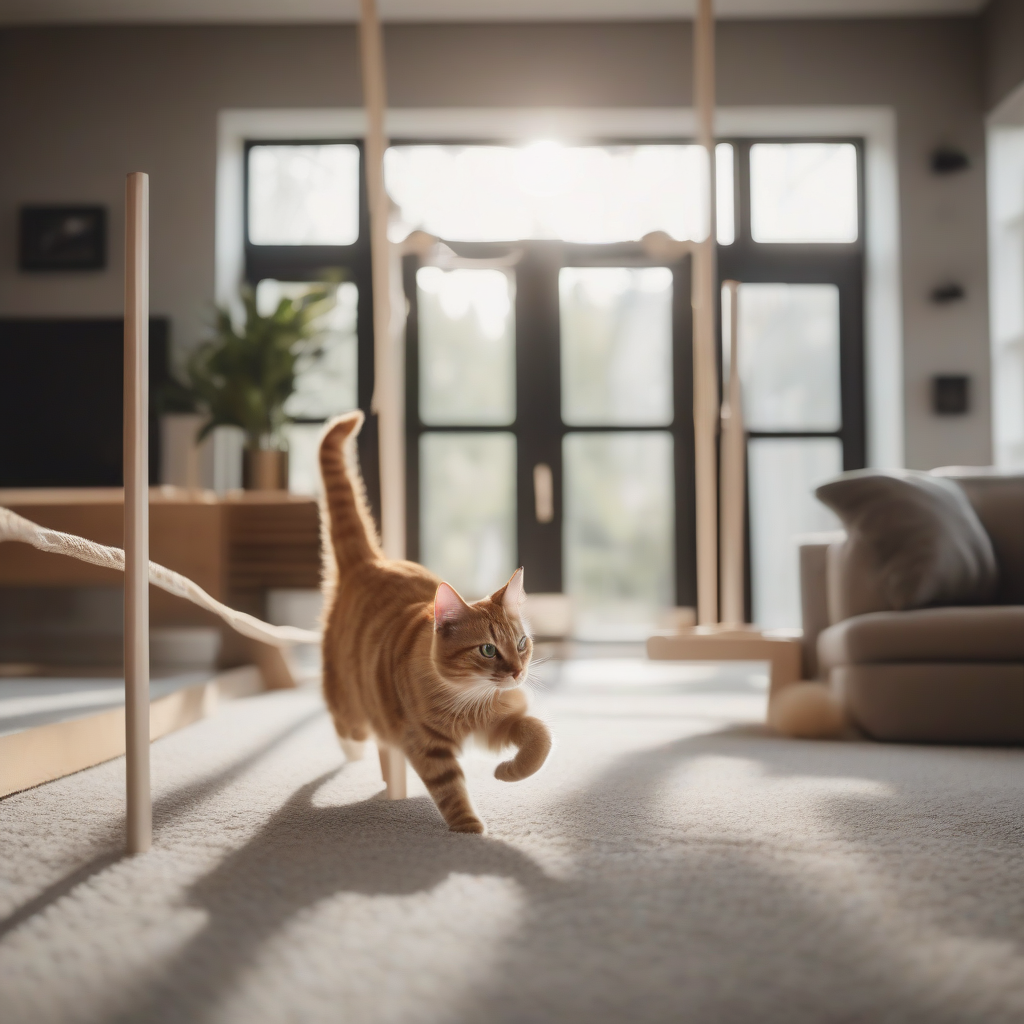
Agile Minds, Fit Paws: March 2026's Viral Cat Agility Training Guide!
As of March 2026, a growing trend in the pet world suggests that cats are more than just cute, sleepy companions; they can be active participants in challenging their mental and physical capacities. This is where "Cat Agility Training" emerges as a viral phenomenon. Agility courses, long popular for dogs, are now being reimagined for cats to enhance their agility, problem-solving skills, and bond with their humans. These specially developed training sessions for cats satisfy their natural hunting instincts and curiosity while helping them lead healthy lives.
What is Cat Agility Training and Why is it So Popular in March 2026?
Cat agility training is a physical and mental activity that involves cats completing a series of tasks such as going through tunnels, jumping over obstacles, weaving through slalom poles, and climbing ramps. While similar to dog agility, it is adapted to suit cats' independent nature and different motivational drives. Several reasons contribute to this trend's rise in March 2026:
- Increased Awareness: Pet owners are realizing that their cats need more than just food and water; they also require mental and physical stimulation.
- Social Media Influence: Entertaining and impressive videos of cats performing agility are rapidly spreading on platforms like TikTok, Instagram, and YouTube, inspiring many cat owners.
- Technology and Product Development: Modular, easy-to-set-up-at-home, and cat-safe agility kits are being introduced to the market.
- Spring Energy: With nature reawakening from winter, pet owners are seeking new and fun ways for their cats to expend their spring energy.
Essential Agility Equipment: DIY and Professional Options
You don't need expensive equipment to start cat agility training. You can create DIY solutions using items around your home or invest in professional kits.
- Tunnels: You can make tunnels by taping cardboard boxes together or using children's play tunnels.
- Jump Hurdles: Low cushions, stacks of books, or specially designed adjustable low hurdles can be used.
- Slalom Poles: These can be created with mop handles, PVC pipes, or even cardboard paper towel rolls that can stand upright.
- Platforms/Ramps: Sturdy cardboard boxes, small stools, or specific cat climbing platforms will work.
Professional agility sets are typically more durable, safe, and consist of modular pieces that are easy to assemble. They can be purchased online or from specialized pet stores.
Starting Agility Training: Patience and Positive Reinforcement are Key
Cats may not immediately follow commands like dogs. Therefore, patience, understanding, and positive reinforcement are fundamental principles.
Finding the Right Motivation
Identify your cat's favorite treats, wet food, or toys. These will be your greatest allies during training.
Short and Fun Sessions
Cats have short attention spans. Short, fun sessions of 5-10 minutes a day are ideal. End the training immediately if your cat gets bored or becomes unwilling.
Positive Reinforcement
When your cat completes a task (or even attempts it!), reward them immediately and praise them. Never punish or force them. Make sure they see training as a game.
Progress Step-by-Step
Introduce each movement slowly. For example, to get them through a tunnel, first place a treat inside the tunnel, then call them from the other end.
Simple Agility Moves and Training Techniques
Tunnel Passage
Place a favorite treat in the middle or at the far end of a tunnel to encourage your cat to go from one end to the other. Start with a short tunnel, gradually increasing its length.
Hurdle Jump
Begin with a very low obstacle (e.g., a towel laid on the floor). Encourage your cat to jump over it. You can point to the hurdle with one hand while extending a treat with the other. Reward immediately upon success.
Slalom (Weaving Through Poles)
Arrange several poles (or cardboard rolls) in a line. Guide your cat to weave between the poles using a treat in your hand. The goal is to teach them a figure-eight motion.
Platform Ascent/Descent
Use a small platform (stool, sturdy box). Guide your cat with a treat to climb onto and descend from the platform with their paws. You can add simple commands like "Up" and "Down."
Target Training (with a Pointer)
Teach your cat to touch a specific spot (target) using a pointer stick or even your finger. This is an excellent foundation for guiding your cat through more complex courses.
Benefits of Agility for Your Cat
Cat agility training is more than just a fun activity; it offers several significant benefits for your cat's overall well-being:
- Physical Fitness and Weight Control: Regular exercise helps your cat stay in shape, strengthen their muscles, and maintain a healthy weight.
- Mental Stimulation and Boredom Prevention: Cats are intelligent creatures and need mental stimulation. Agility develops problem-solving skills and reduces behavioral issues caused by boredom.
- Reduction of Behavioral Problems: Cats that expend enough energy and are mentally engaged are less prone to unwanted behaviors such as scratching furniture or displaying aggression.
- Strengthening the Human-Cat Bond: Quality time spent together and the feeling of accomplishment deepen the bond between you and your furry friend.
Frequently Asked Questions
Can Every Cat Do Agility?
Yes, most cats can do agility with courses adapted to their age and physical condition. However, for older cats or those with health issues, it is essential to consult a veterinarian.
When Should I Start?
You can start anytime your cat has completed basic socialization and training, and is curious and energetic. Even kittens can begin with very simple movements.
What are the Safety Tips?
Always set up the course in a safe and supervised environment. Avoid slippery surfaces. Ensure that the equipment you use is made of materials that will not harm your cat, have no sharp edges, and will not easily tip over.
Conclusion
Cat agility training, one of March 2026's most viral trends, is an excellent way to enhance your cat's quality of life. They expend energy through physical activities, receive mental stimulation, and strengthen their bond with you. Remember, the key is for your cat to have fun and perceive the process as an enjoyable experience. May their paws be fit and their minds agile!