Unlock Your Cat's Hidden Talents: Advanced Cat Training Techniques with Positive Reinforcement
As we enter March 2026, there's a significant shift in our understanding of pet ownership. Cats are no longer seen just as delightful house inhabitants but as intelligent and capable learners who can surprise us with their potential for interaction. The concept of training, traditionally associated with dogs, has now become a valid and even highly beneficial activity for cats. However, this is not achieved through 'old-fashioned' methods, but through modern approaches like positive reinforcement that respect a cat's nature.
In this guide, we will explore advanced cat training techniques that will unlock your cat's hidden talents, strengthen your bond, and offer them entirely new experiences. Step into this exciting field, which is one of the most remarkable pet trends of March 2026!
Why is Advanced Cat Training Necessary?
Cat training is about more than just teaching cute tricks. It has much deeper and more beneficial outcomes:
Mental and Physical Stimulation
Cats, with their natural hunting instincts, require mental and physical stimulation. Training sessions prevent boredom, keep their brains active, and develop their problem-solving skills. Especially for indoor cats, this is a great way to mimic the richness of their natural environments.
Addressing Behavioral Issues
Undesirable behaviors (scratching furniture, excessive meowing, urinating outside the litter box, etc.) often stem from boredom, stress, or a lack of understanding. Training teaches your cat alternative behaviors while helping you better understand their fundamental needs. For example, teaching your cat to use a scratching post is the most effective way to protect your furniture.
Strengthening the Cat-Owner Bond
Training sessions are a unique way to spend quality time with your cat and build mutual trust. Achieving things together deepens your bond and increases your cat's confidence in you.
Fun and New Skills
Watching a cat learn a new trick is an enjoyable experience for both you and your feline friend. You might be surprised at how much your cat can learn, from simple commands like 'paw' or 'sit' to completing more complex obstacle courses.
Fundamentals of Positive Reinforcement: Understanding Your Cat's Language
Positive reinforcement is a training method that increases the likelihood of a desired behavior being repeated by rewarding the cat immediately after that behavior. This method is particularly effective when working with cats because applying pressure or punishing them often leads to negative outcomes.
Why Positive Reinforcement?
Cats are independent spirits and generally do not tolerate coercion. Positive reinforcement encourages cats to cooperate voluntarily, reduces stress, and makes the learning process enjoyable. While punishment leads to fear and mistrust, rewards increase motivation.
Choosing the Right Reward
Each cat's motivation is different. For some, a tasty food treat is indispensable, while for others, a short play session with their favorite toy or an affectionate stroke is more valuable. Observe what your cat loves most to determine the right reward.
Timing and Repetition
Timing is everything in positive reinforcement. The reward should be given immediately after the desired behavior (usually within 1-3 seconds) so that the cat understands which behavior is associated with the reward. Short, frequent sessions are more effective than long, tiring ones.
Clicker Training: An Effective Tool
A clicker is a small device used in positive reinforcement training. The clicking sound provides a consistent auditory signal indicating that a reward is coming. This helps the cat instantly recognize the correct behavior. Before starting to use the clicker, you should practice 'click and treat' for a few sessions to help your cat associate the clicking sound with a reward.
Advanced Cat Training Techniques and Steps
Now that we know the basics, let's look at some advanced tricks you can teach your cat:
1. Targeting & Shaping
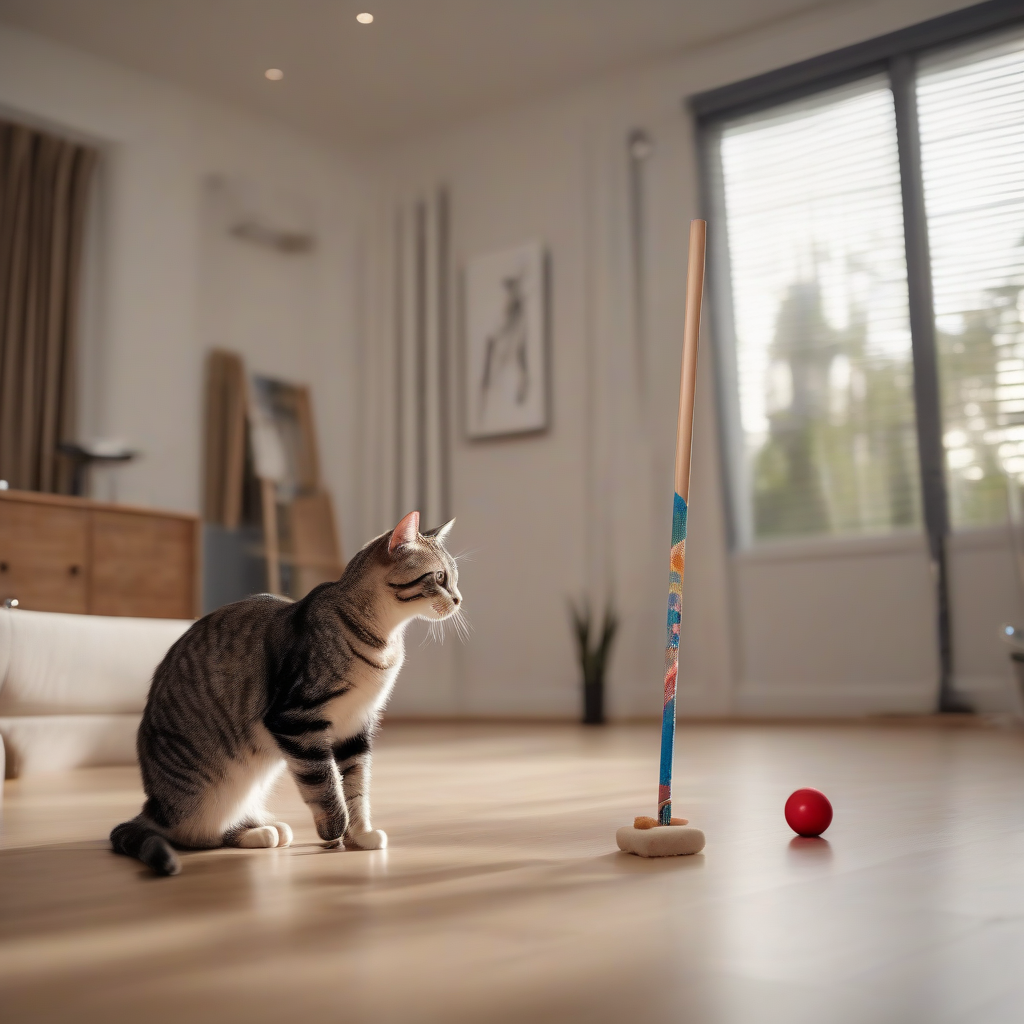
Nose Target: Teach your cat to touch a specific object, like your finger or a target stick, with its nose. This is the foundation for many other tricks.
- Step 1: Bring the target stick close to your cat's nose. If it turns its nose towards it (even if it doesn't touch), click and reward.
- Step 2: Click and reward when the cat touches the target with its nose.
- Step 3: Once your cat learns this behavior, reinforce it by moving the target stick to different places (up, down, right, left).
High Five: You can teach your cat to give a high five using its targeting skill.
- Step 1: When your cat is sitting or standing, hold the target stick slightly above its paw. When it lifts its paw towards the target, click and reward.
- Step 2: Click and reward when it places its paw on the target. Over time, replace the target stick with your hand and add the command 'high five'.
2. Complex Commands
Obstacle Course: Teach your cat to jump over, go under, or weave around small obstacles (books, tunnels, hoops). Shape each step individually with a target stick and rewards.
- Step 1: Place a single obstacle and encourage your cat to go over it with the target stick. Reward when successful.
- Step 2: Teach different obstacles one by one.
- Step 3: Combine the learned obstacles to create a small course.
Fetch: Some cats are naturally inclined to fetch. For those that aren't, patience and correct steps are required.
- Step 1: Choose a small, lightweight toy your cat likes. Reward it when it starts playing with the toy.
- Step 2: Toss the toy nearby. When it goes to the toy or picks it up, click and reward.
- Step 3: When it comes back to you with the toy or drops it at your feet, click and give a big reward. Gradually increase the distance.
3. Intelligence Games and Problem Solving
Advanced Interaction with Puzzle Feeders: Go beyond standard puzzle feeders on the market. Use self-designed or more complex models to encourage your cat to work harder to get food. For example, use feeders with multiple steps that require opening different sections.
Opening/Closing Its Own Door: You can teach your cat to open and close a simple sliding or hinged door (e.g., a cupboard door). This combines targeting and paw manipulation skills.
- Step 1: Reward your cat when it approaches the door.
- Step 2: Reward it when it touches the door with its paw or nose.
- Step 3: Leave the door slightly ajar and encourage your cat to open it. Reward when successful.
- Step 4: Follow similar steps to teach it to push a closing door.
Common Mistakes and What to Avoid
- Impatience: Every cat learns at its own pace. Be patient and celebrate even small achievements.
- Inconsistency: Be consistent with training commands and rewards. Different family members should use the same commands and methods.
- Using Negative Reinforcement: Never yell, punish, or use force. This erodes your cat's trust in you and decreases its motivation to learn.
- Overextending Training Sessions: Cat training sessions should be short and fun (5-10 minutes). End the session when your cat gets bored or loses focus.
Cat Training as a March 2026 Trend
March 2026 marks a period where pet parents' desire to build more active and meaningful bonds with their cats is growing. During this time, cat training goes beyond being merely a behavior correction tool and stands out as a lifestyle choice that supports cats' mental health and well-being. While technological advancements like smart toys and interactive feeders support this process, the human-cat interaction and positive reinforcement philosophy underlying training remain crucial. Training is key not only to understanding 'what' a cat does, but also 'how' it feels.
Conclusion
Discovering your cat's hidden talents not only teaches them new tricks but also opens a deeper window into their world. Advanced cat training with positive reinforcement, as one of March 2026's most valuable pet trends, allows you to build your relationship with your cat on mutual respect, understanding, and endless fun. At YuDo Pet, we believe in the potential behind every paw and invite you on this exciting journey of discovery. Remember, a happy cat is a cat eager to learn!